
The Concept
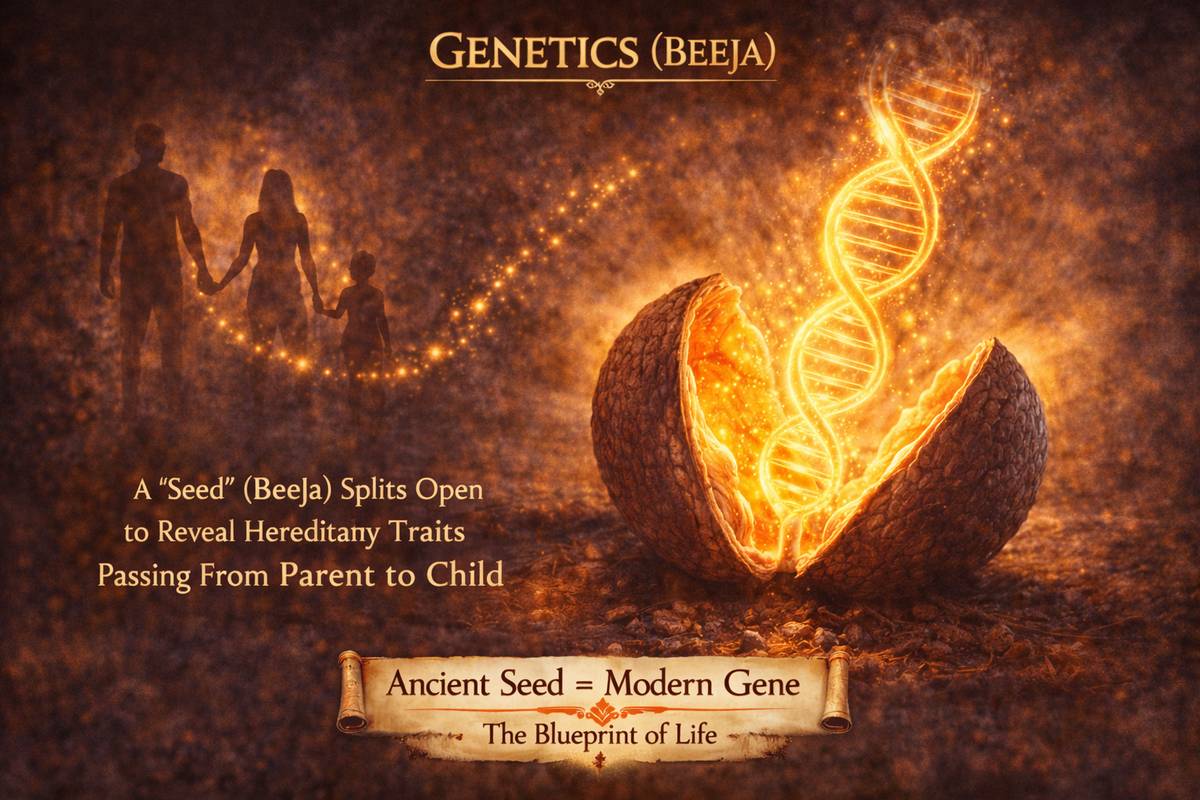
Traits are passed on from parents to offspring. The ‘seed’ (DNA) contains the blueprint. Defects in the seed result in defects in the child.
The Story
Thousands of years before Gregor Mendel played with pea plants, the Charaka Samhita was debating the mysteries of heredity. Charaka used the terms Beeja (Seed) and Beejabhaga (part of the seed) to describe what we now call chromosomes and genes. He realized that if a specific part of the “seed” was damaged, the child would be born with a corresponding defect, such as blindness. This wasn’t just theory; it was the basis for the Gotra system, which prohibited marriage within the same bloodline to prevent recessive genetic diseases—a rule of “consanguinity” that modern science has only recently validated.
The Timeline
| Milestone | Details |
| Western Ref. |
1865 CE (Gregor Mendel) |
| Indian Source |
Prior to 4,000 BCE (Charaka Samhita) |
| Chron. Gap |
Over 5,000 Years |
The Original Text
The Charaka Samhita (Sarira Sthana 3.17) extensively discusses how specific defects in the “seed” lead directly to birth defects.
Related Innovations
The Gotra System prohibits marriage within the same bloodline to prevent recessive genetic illnesses (Manusmriti). Eugenics (Su-Praja) is the science of raising healthy offspring by food, timing, and partner selection (Charaka Samhita, 4,000 BCE).
Fun Fact
They advised individuals not to marry within the same Gotra (lineage) to avoid genetic problems, which is still provided today regarding consanguinity.
The Modern Legacy
Genetics and the Human Genome Project constitute the foundation of modern science.
Recent Post

The Concept Yoga demonstrates that the autonomic nervous system may [...]
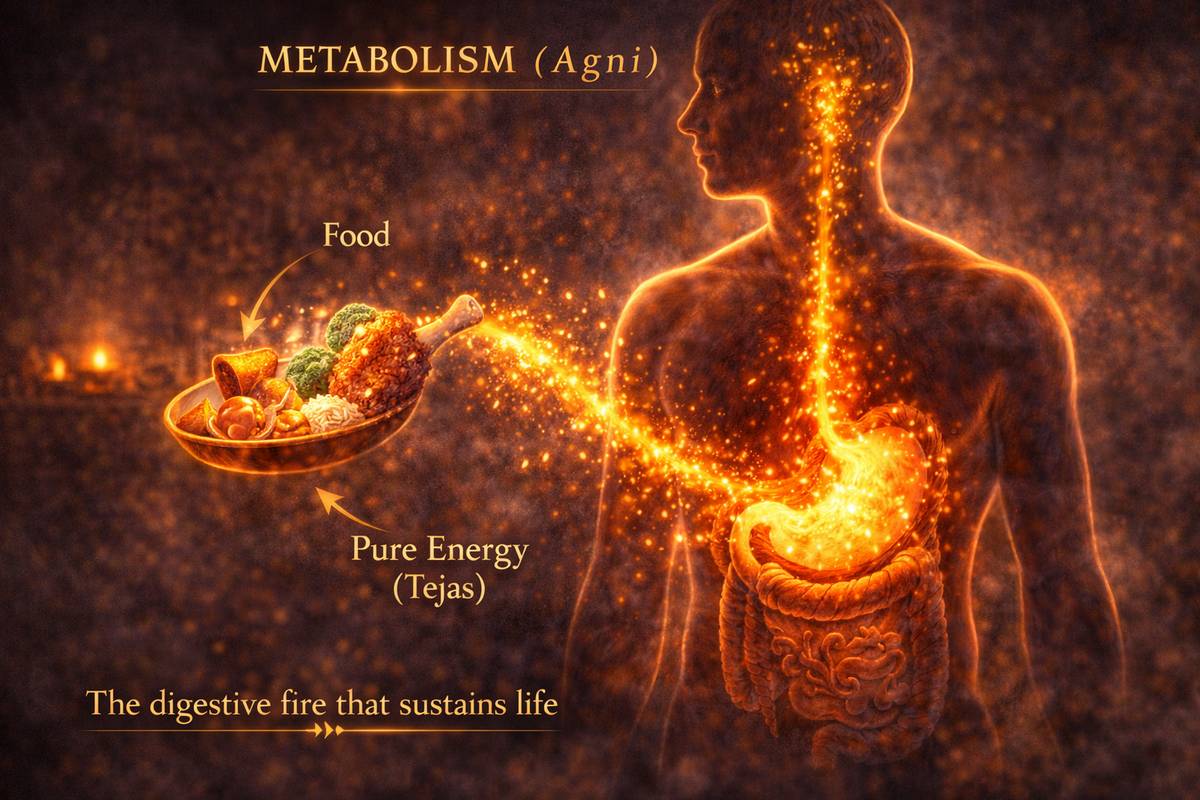
The Concept The body functions as an engine, burning fuel [...]