
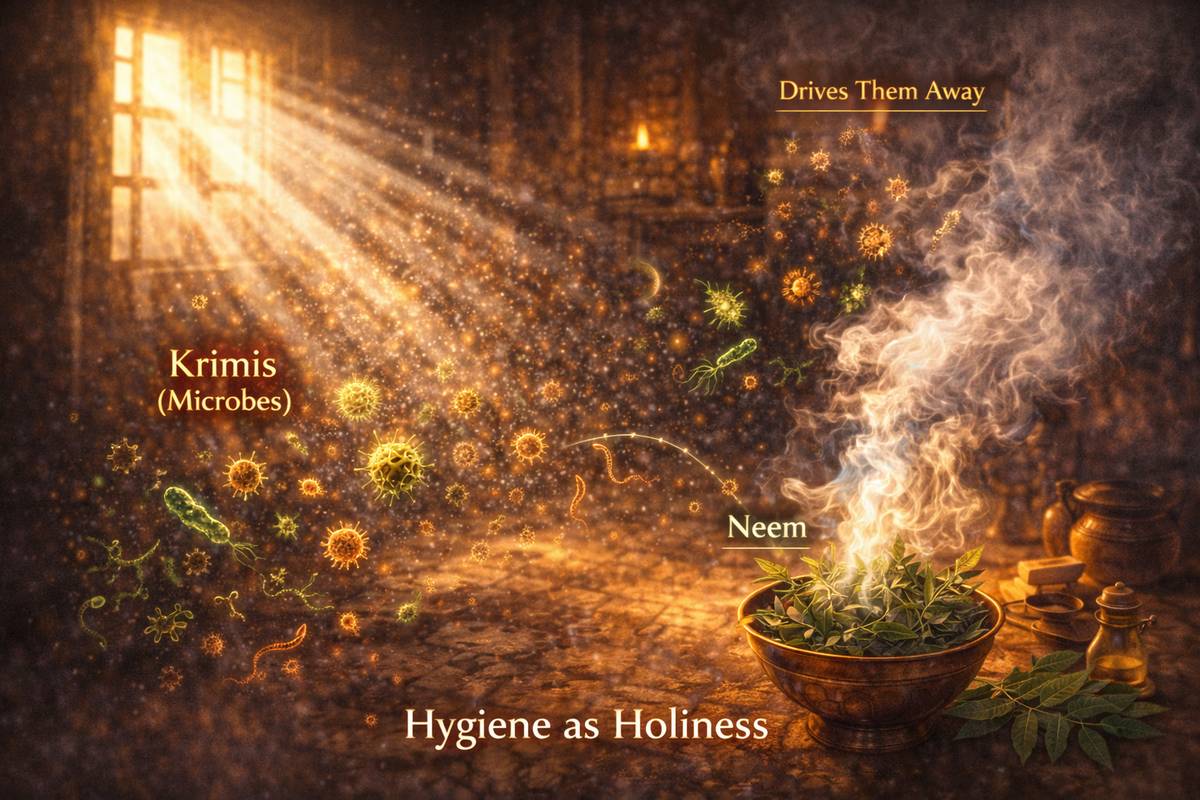
The Concept
Bacteria, viruses, and parasites are small, invisible organisms that cause a variety of diseases.
The Story
Louis Pasteur is credited with “discovering” germs in the 1860s, but the Atharva Veda was already chanting about Krimi—the tiny, invisible organisms that cause disease. Ancient Indian medicine classified these “worms” into two types: Drishta (visible) and Adrishta (invisible). They knew that these “microbes in the blood” were responsible for illness long before the invention of the microscope. To fight these unseen killers, they recommended sterilizing surgical tools and fumigating sickrooms with the smoke of neem and mustard. Even the traditional greeting of Namaste—bowing without touching—likely originated as a sophisticated “hand-washing” ritual to prevent the spread of these invisible Krimis.
The Timeline
| Milestone | Details |
| Western Ref. |
1670s CE (Leeuwenhoek sees bacteria); 1860s (Pasteur) |
| Indian Source |
Prior to 10,000 BCE (Atharva Veda) |
| Chron. Gap |
Over 11,000 Years |
The Original Text
The Atharva Veda (2.31.2) contains detailed incantations and references against invisible worms in the entrails and head.
Related Innovations
Sterilisation – Boiling water and surgical equipment to eliminate ‘invisible killers’ (Sushruta Samhita, 5,000 BCE). Fumigation (Dhupana): Using neem and mustard smoke to disinfect sickrooms (Sushruta Samhita).
Fun Fact
The common greeting Namaste (hands folded, no touch) most likely originated as a way to prevent these unseen Krimis from spreading.
The Modern Legacy
Microbiology and sterilisation laws in hospitals serve as the foundation for modern medicine.
Recent Post

The Concept Yoga demonstrates that the autonomic nervous system may [...]
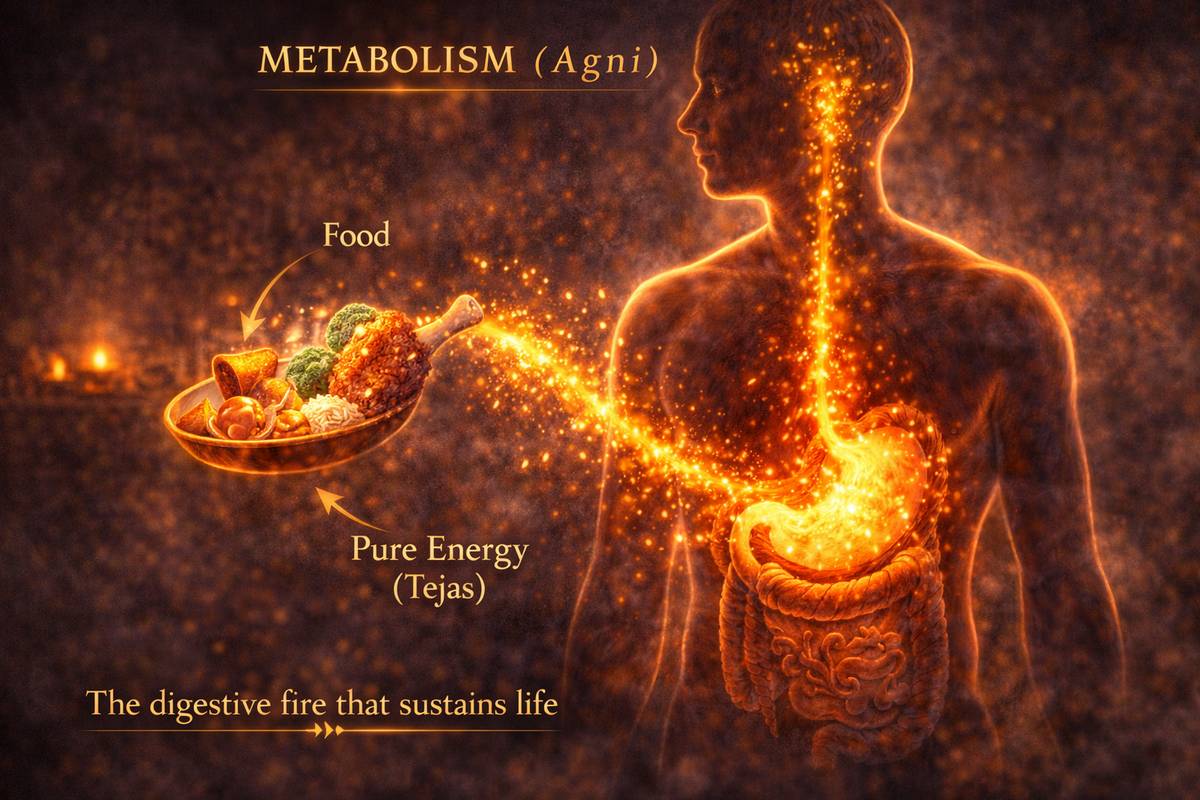
The Concept The body functions as an engine, burning fuel [...]