

The Concept
Blood is always moving; it flows from the heart to each cell and back again. It carries nutrients (Rasa) to the body.
The Story
William Harvey is often credited with discovering the circulation of blood in 1628, but Indian medical texts had described the process thousands of years earlier. The Charaka Samhita defined the heart (Hridaya) as the root from which vessels transport nutritional fluid (Rasa) throughout the body. They described this flow as Chakravat—moving continually like a spinning wheel. Even the name Hridaya was a scientific description: Hri (receive), Da (give), and Ya (move), perfectly capturing the pumping action of the human heart long before the first stethoscope was ever built.
The Timeline
| Milestone | Details |
| Western Ref. |
1628 CE (William Harvey) |
| Indian Source |
Prior to 4,000 BCE (Bhela Samhita / Charaka) |
| Chron. Gap |
Over 5,500 Years |
The Original Text
The Charaka Samhita (Sutra Sthana 30.12) systematically describes the heart as the central root of the body’s channels.
Related Innovations
Pulse Diagnosis (Nadi Pariksha) – Using the arterial pulse to examine the condition of internal organs (Sharangadhara Samhita, 13th century CE) demonstrates that they understood the pulse was a communication from the heart. Vital spots (Marma): Locating spots where main arteries and nerves intersect (Sushruta Samhita), which might result in fatal haemorrhage or paralysis if hit.
Fun Fact
The name ‘Hridaya’ is derived from the words ‘Hri’ (to receive), ‘Da’ (to give), and ‘Ya’ (to move), which literally describe how the heart pumps.
The Modern Legacy
Cardiology is founded on a thorough understanding of flow dynamics and pressure (blood pressure).
Recent Post

The Concept Yoga demonstrates that the autonomic nervous system may [...]
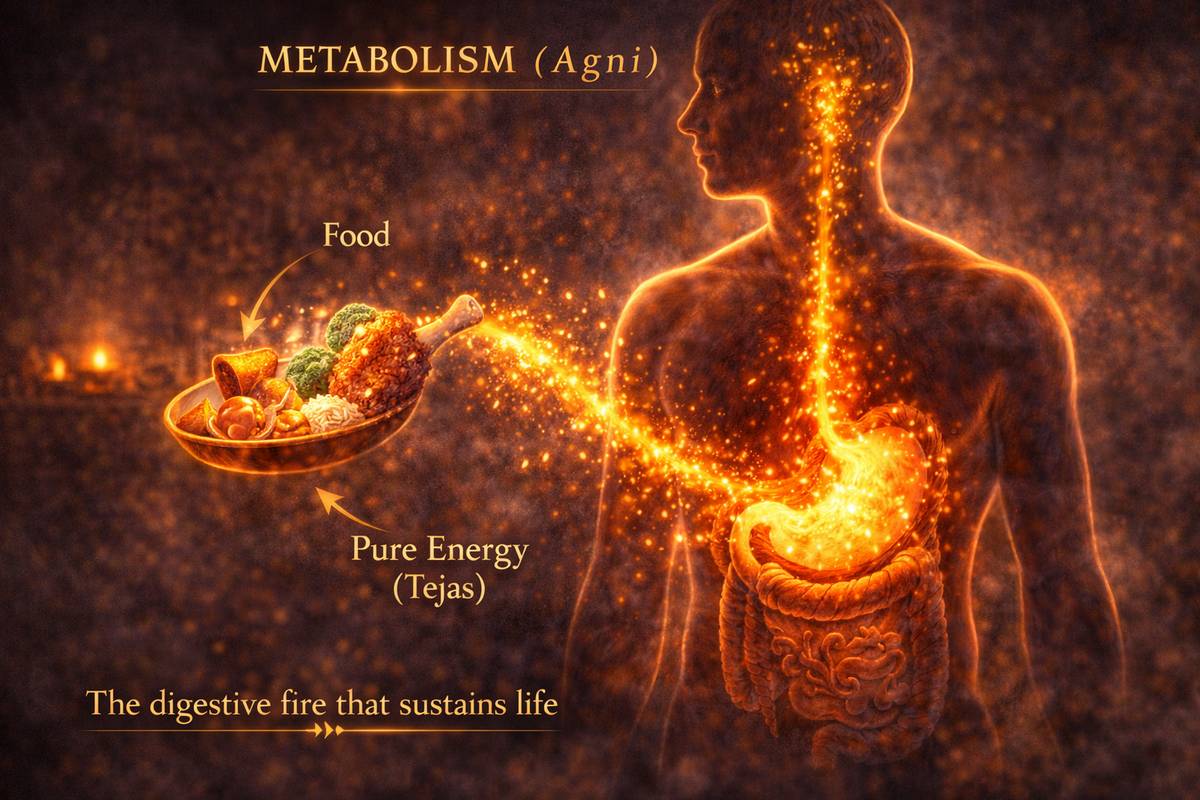
The Concept The body functions as an engine, burning fuel [...]