

The Concept Vaccination is based on the idea that giving a healthy person a small, weak dose of a disease (such as smallpox) can teach their immune system to fight the real disease.
The Story In 1767, long before Edward Jenner “invented” the smallpox vaccine, Dr. J.Z. Holwell reported a fascinating practice in India. Brahmin doctors were practicing Tika (Inoculation), taking a tiny amount of dried smallpox scab and rubbing it into a scratch on a healthy person’s arm. They understood that a weak dose of the “poison” taught the body how to fight the real disease. This ancient form of immunotherapy saved millions of lives across Asia and provided the roadmap for the vaccines that have eradicated diseases today.
The Timeline
| Milestone | Details |
| Western Ref. |
1796 CE (Edward Jenner) |
| Indian Source |
Recorded in 1767 CE (Practiced since antiquity) |
| Chron. Gap |
Over 1,000 years |
The Original Text
The Saktisangama Tantra (c. 500 CE) explicitly documents the foundational concepts and procedures of the Tika inoculation.
Fun Fact The time of year when people were vaccinated (usually in the spring) was carefully selected to keep the viral burden low, demonstrating a thorough understanding of epidemiology.
The Modern Legacy Immunology and vaccines are the only reasons we’ve eradicated diseases like smallpox and polio.
Recent Post

The Concept Yoga demonstrates that the autonomic nervous system may [...]
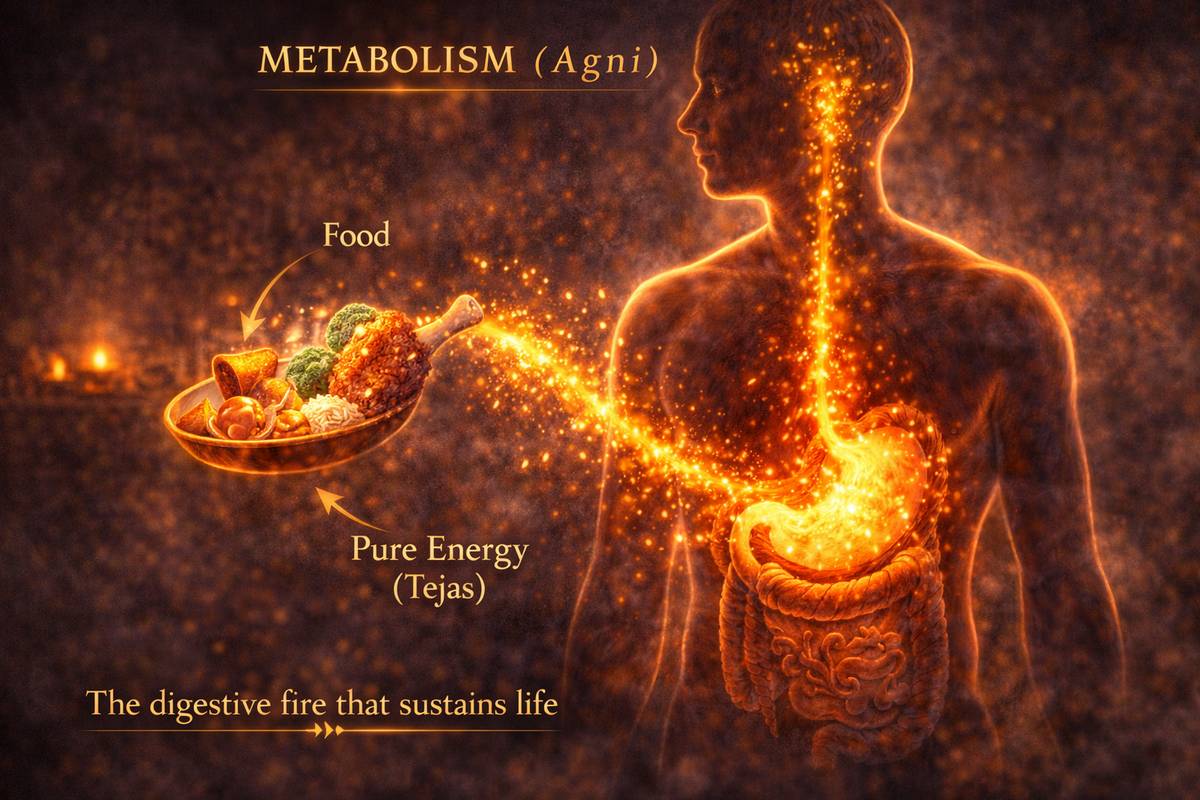
The Concept The body functions as an engine, burning fuel [...]