
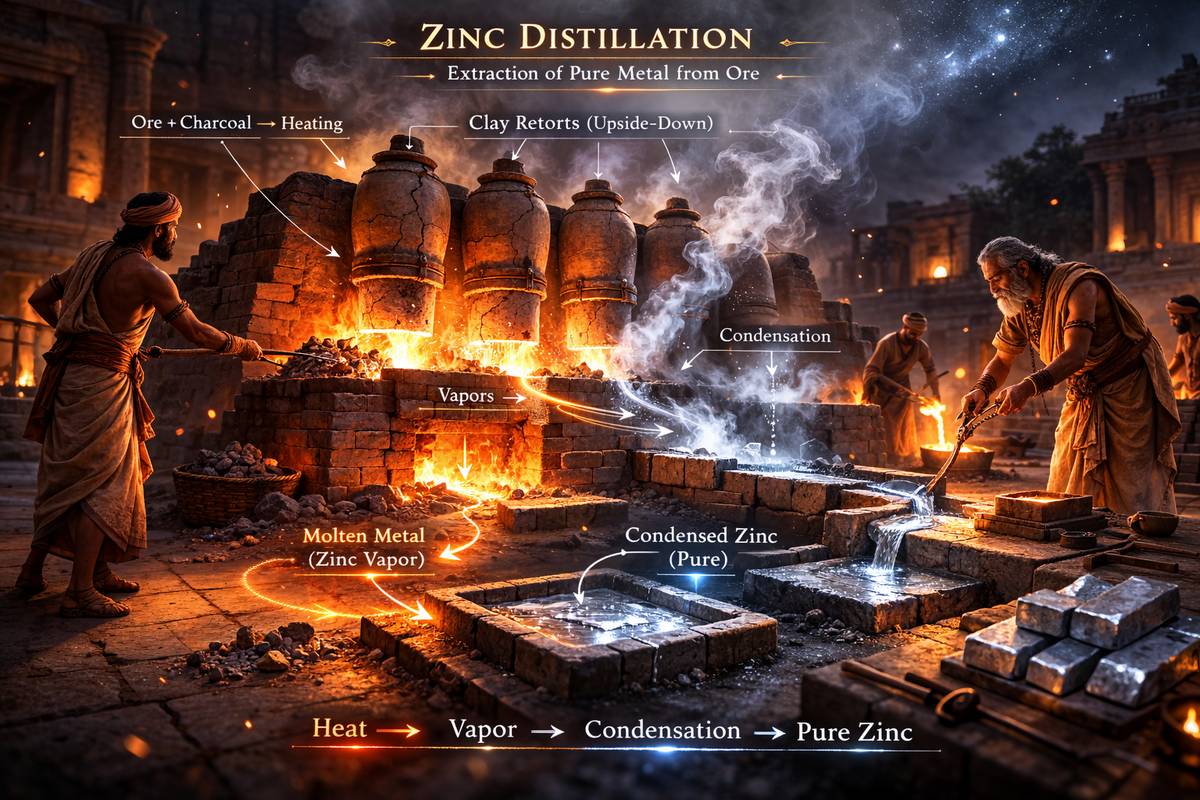
The Concept Zinc is a tricky metal. When you heat zinc ore to melt it, the metal turns into gas and escapes immediately. To obtain solid zinc, you must ‘distil by descent’, which involves heating the ore on top and capturing the vapour as it cools in a sealed chamber below.
The Story Zinc is a “trickster” metal—it turns into gas the moment it melts, making it almost impossible to capture. For centuries, this stumped the best scientists in Europe. But at the Zawar Mines in Rajasthan, ancient Indian chemists pulled off a feat of “high-tech” engineering. They designed a “distillation by descent” furnace that heated the ore from the top and forced the zinc vapor downward into a cool chamber where it finally solidified. This Indian secret was so valuable that it was eventually “borrowed” by the West to launch the modern metal industry.
The Timeline
| Milestone | Details |
| Western Ref. |
1738 CE (William Champion) |
| Indian Source |
Prior to 1200 CE (Zawar Mines); 2nd Century CE (Nagarjuna); Prior to 10,000 CE (Rig Veda) |
| Chron. Gap |
Over 11,000 Years |
The Original Text
Sanskrit Shloka: मूकामूषागता ध्माता टङ्कणासमन्विता । सत्त्वं कुटिलसंकाशं पतते नात्र संशयः ॥
Transliteration: Mūkāmūṣāgatā dhmātā ṭaṅkaṇāsamanvitā | Sattvaṃ kuṭilasaṃkāśaṃ patate nātra saṃśayaḥ || Rasaratnusamuccaya (Verse 2.157) (Describes the apparatus for extraction)
Meaning: “When the ore is placed in the ‘Muka Musha’ (closed crucible) with borax (Tankana) and heated, the essence falls down (distills) looking like tin/silver. There is no doubt about this.”
Related Innovations The Rig Veda and Atharva Veda discuss a ‘yellow metal’ called Arakuta (brass), which differs from iron and gold. This demonstrates that humans in India could create alloys a long time ago. Because brass is manufactured by mixing copper and zinc ores, this passage demonstrates that Vedic metallurgists utilised zinc thousands of years before it was chemically separated in the West.
Fun Fact The Chinese most likely learnt how to smelt zinc from India, and the British adapted the notion. It was one of the earliest cases of high-tech industrial espionage.
The Modern Legacy Zinc is necessary for galvanisation (rustproofing automobiles) and the production of brass alloys, which are the foundation of contemporary science.
Recent Post
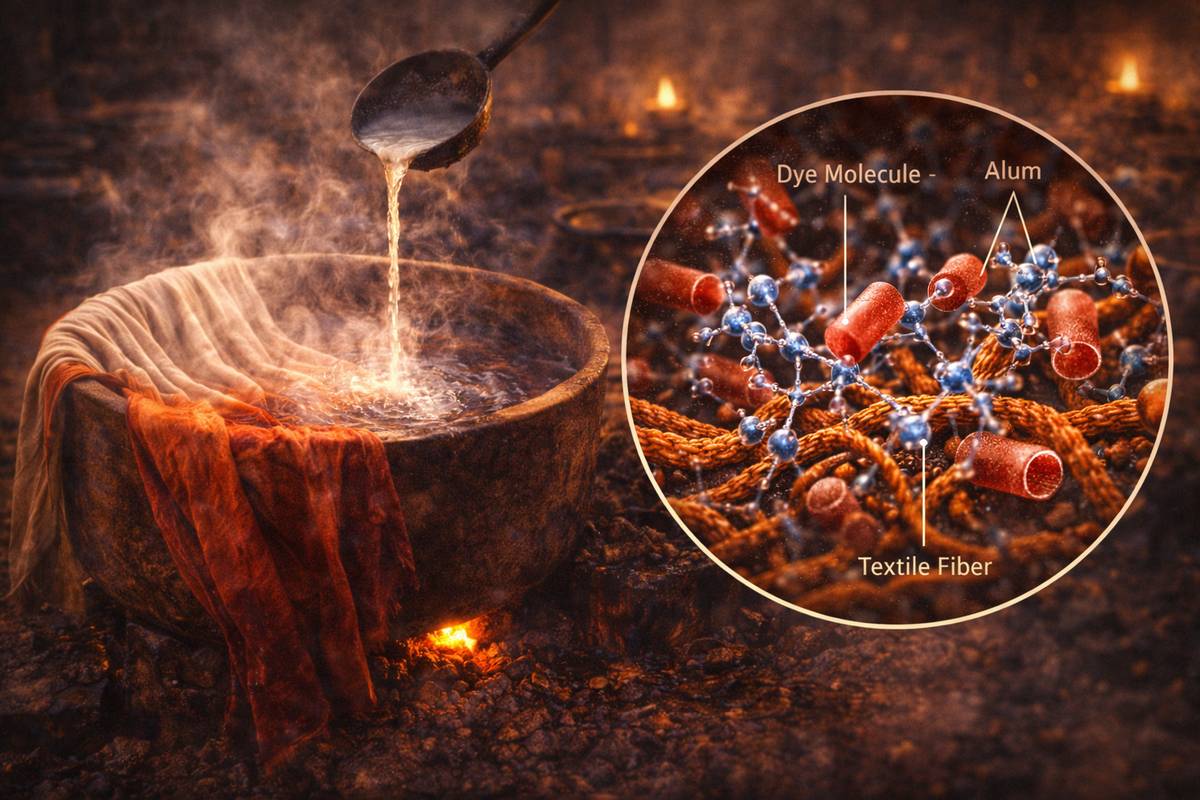
The Concept Dipping clothing in dye will cause it to [...]
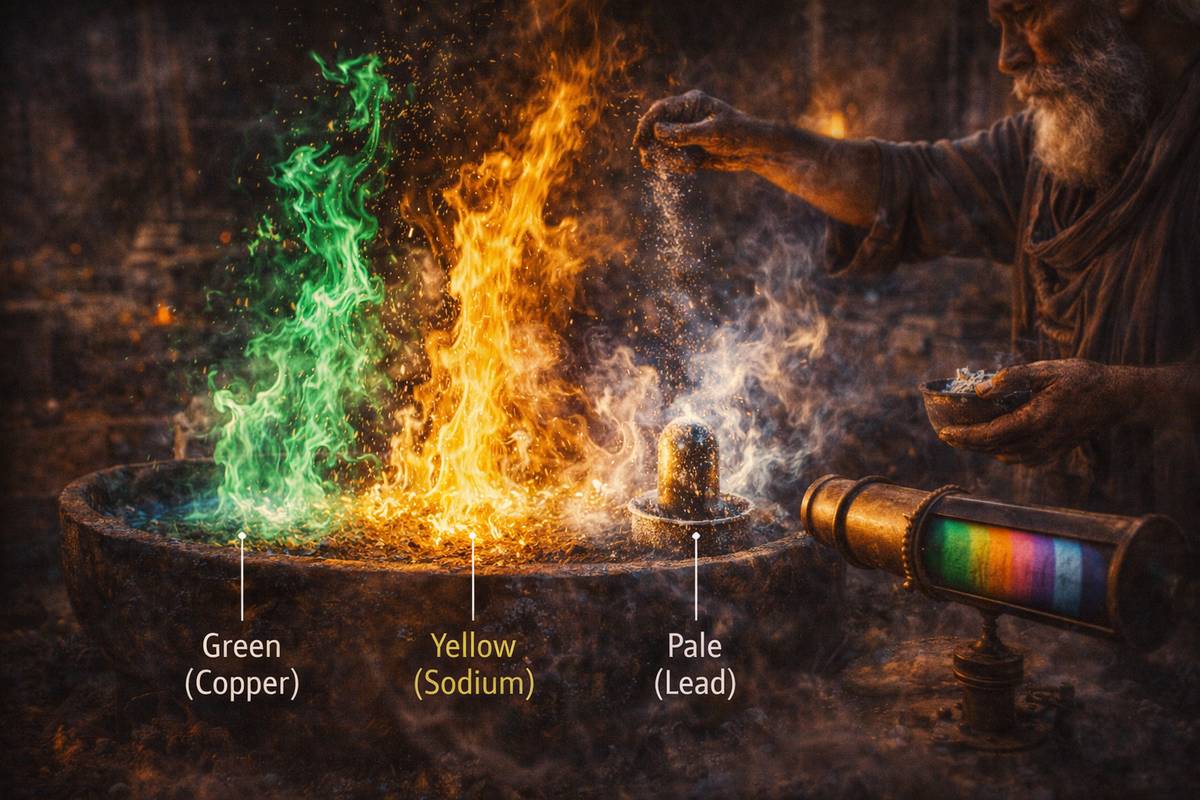
The Concept Different metals burn in different hues. For example, [...]