
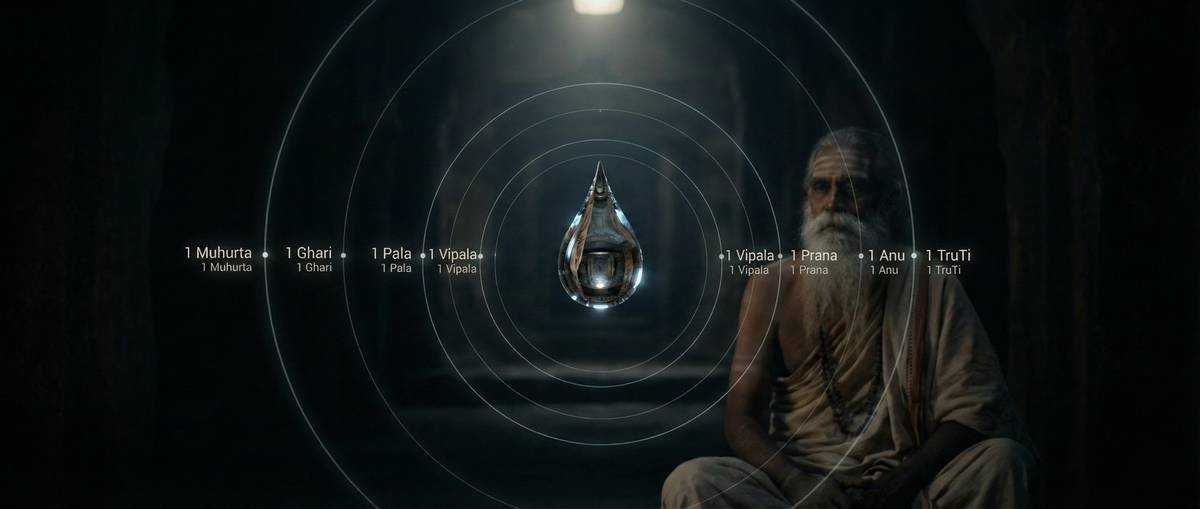
The Concept You may break time down into smaller and smaller bits. Microseconds are necessary to analyse rapid events such as chemical reactions.
The Story How do you measure a split second without a digital clock?. The Surya Siddhanta didn’t just count days and years; it split time into tiny, invisible slices. They defined a Truti as roughly 30 microseconds—the time it takes for a needle to pierce a single petal in a stack of a hundred. Why did they need such precision? They were observing rapid chemical changes and the lightning-fast movements of the planets. This obsession with “Micro-Time” proves that for the ancient Rishis, the universe wasn’t just big; it was operating on a high-speed clock that they were determined to decode .
The Timeline
| Milestone | Details |
| Western Ref. |
1900s CE (Microsecond measurement) |
| Indian Source |
Surya Siddhanta (c. 10,000 BCE) |
| Chron. Gap |
Over 11,000 Years |
The Original Text
The Surya Siddhanta (1.11) clearly defines the tiny fractions of time including Prana, Vinadi, and Truti.
Related Innovations The Surya Siddhanta used a base-60 time system that divided the day into Ghatis and Vighatis, which correspond to contemporary minutes and seconds. The Yoga Vasistha, on the other hand, proposed Kala-Vada, which states that time flows according to how the observer feels.
Fun Fact According to old literature, piercing a stack of 100 lotus petals with a needle requires one Truti to puncture one petal.
The Modern Legacy GPS and high-speed computers must be able to accurately measure nanoseconds.
Recent Post
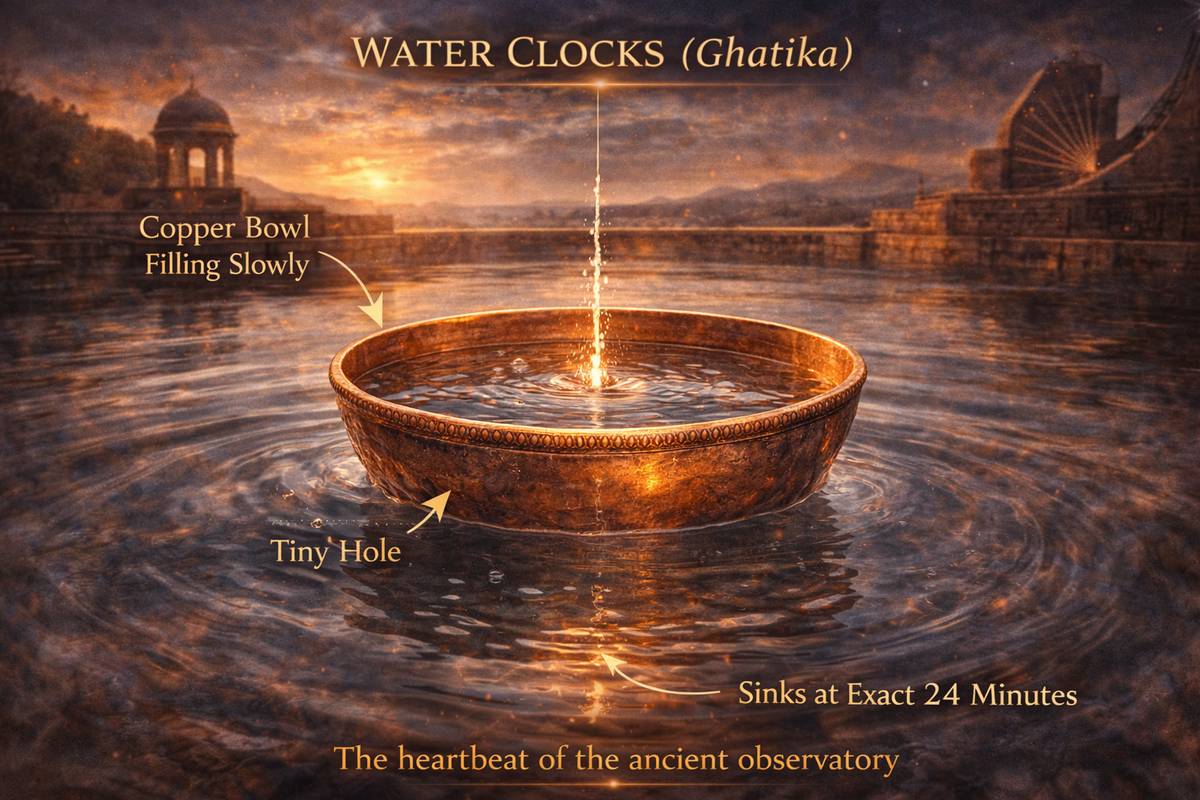
The Concept A water clock, for example, calculates time based [...]
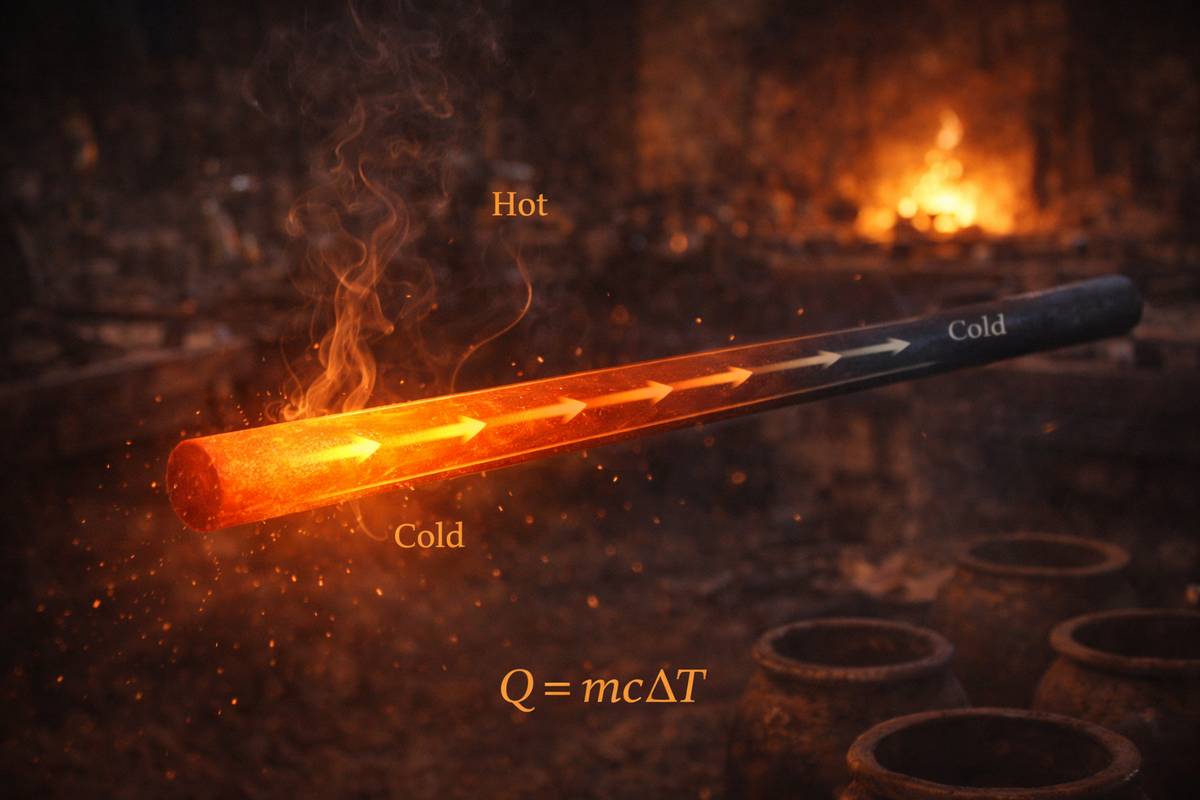
The Concept Old European science considered heat to be a [...]