
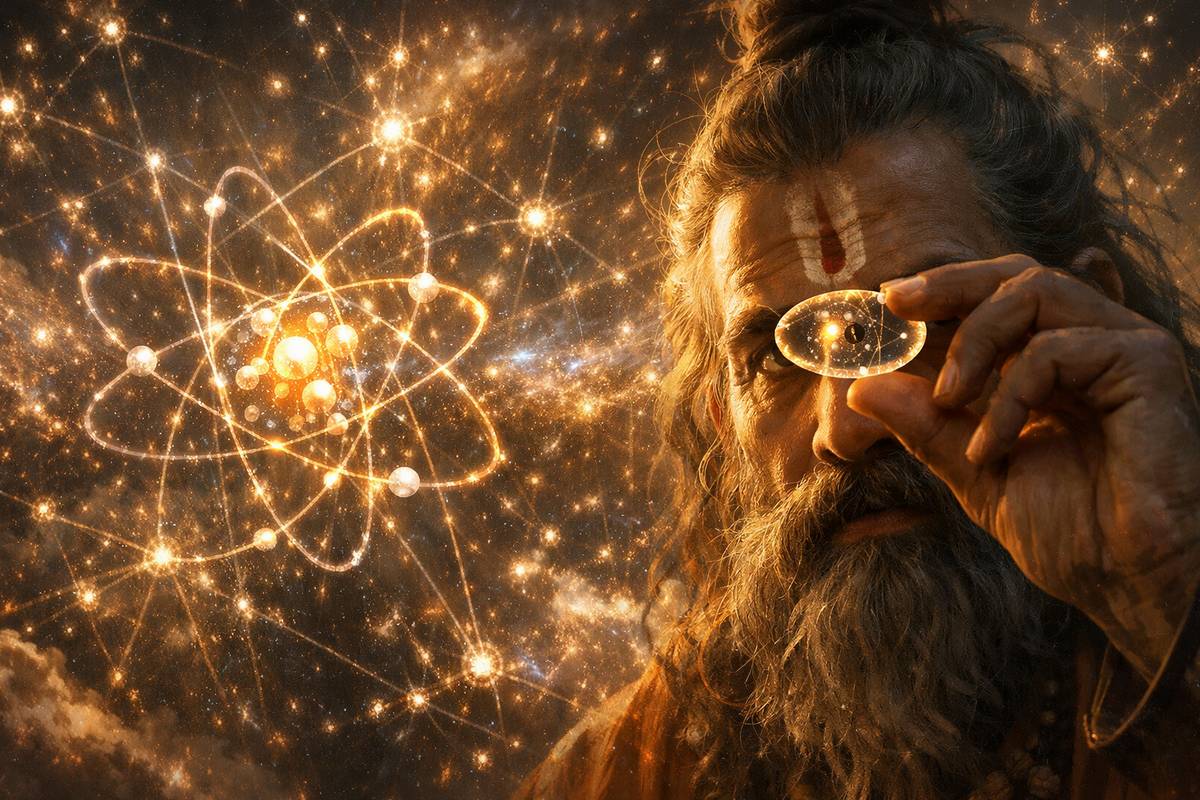
The Concept Atoms are the tiniest and most fundamental component of all matter. You can’t see them with the naked eye, yet they work together to create what we see.
The Story Long before the term “Atom” was coined in Greece, an Indian philosopher named Kanada was walking through the streets, picking up discarded grains of rice. He wondered: how small can you break a grain before it vanishes?. He concluded that matter is made of Parmanu—indestructible, eternal particles that are too small to see. He didn’t stop at philosophy; he explained how these atoms bond in pairs (Dvinuka) and triplets (Trinuka) to create the world we touch. While history often looks to the 19th century for atomic theory, Kanada had already described the “invisible building blocks” of the universe over 7,000 years ago.
The Timeline
| Milestone | Details |
| Western Ref. |
400 BCE (Democritus) |
| Indian Source |
Prior to 5,000 BCE (Kanada – Vaisesika Sutras) |
| Chron. Gap |
Over 4,000 Years |
The Original Text
Sanskrit Shloka: सदकारणवन्नित्यम् । तस्य कार्यं लिङ्गम् ॥ Transliteration: Sad akāraṇavan nityam | Tasya kāryaṃ liṅgam || Vaisheshika Sutras (4.1.1) Meaning: “That which exists but has no cause (cannot be divided further) is Eternal (Nityam). Its existence is inferred from its effects (visible matter).”
Related Innovations According to the Vaisheshika Sutras (about 5,000 BCE), atoms combine in specific ratios (diads and triads) to generate new substances, with heat (Tejas) serving as the fundamental energy required to rupture atomic bonds and promote chemical transformations (Paka).
Fun Fact Kanada acquired his name, which means ‘Atom Eater’, by picking up rice grains from the road, teaching that even the smallest particle has value.
The Modern Legacy Atomic theory is the foundation for chemistry, nuclear physics, and quantum mechanics.
Recent Post
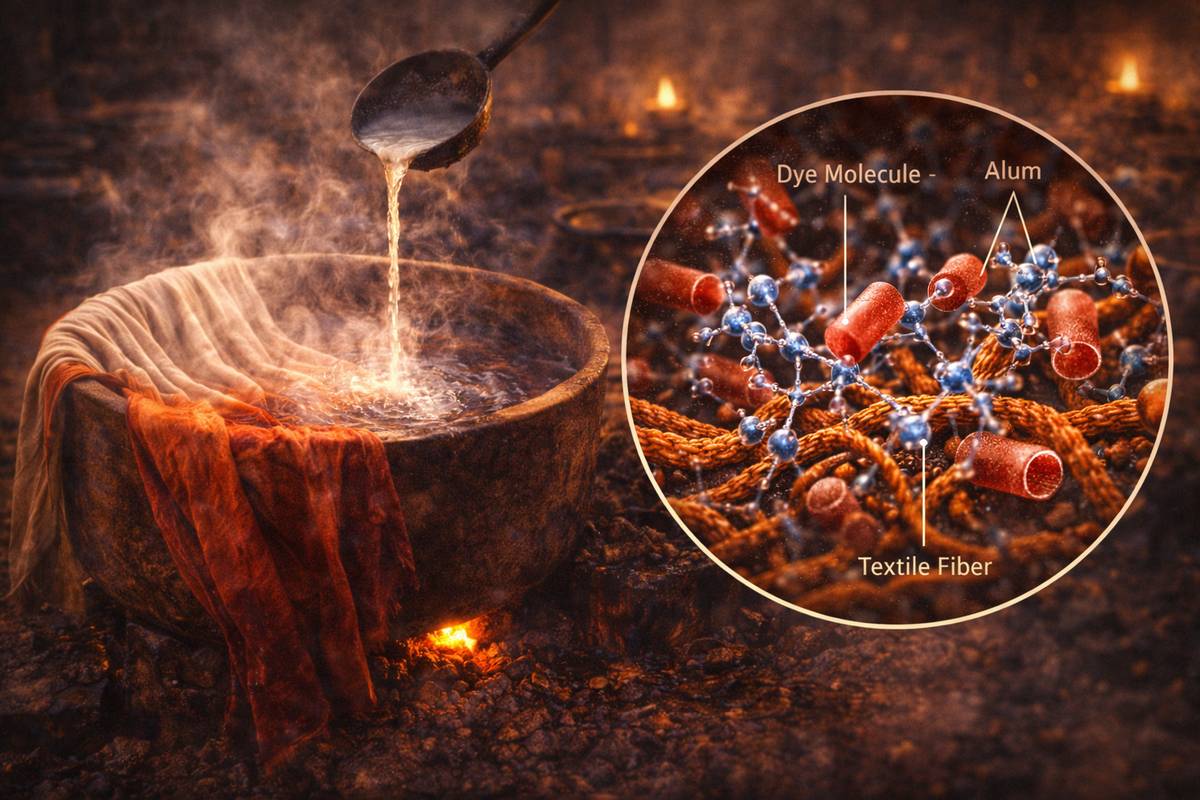
The Concept Dipping clothing in dye will cause it to [...]
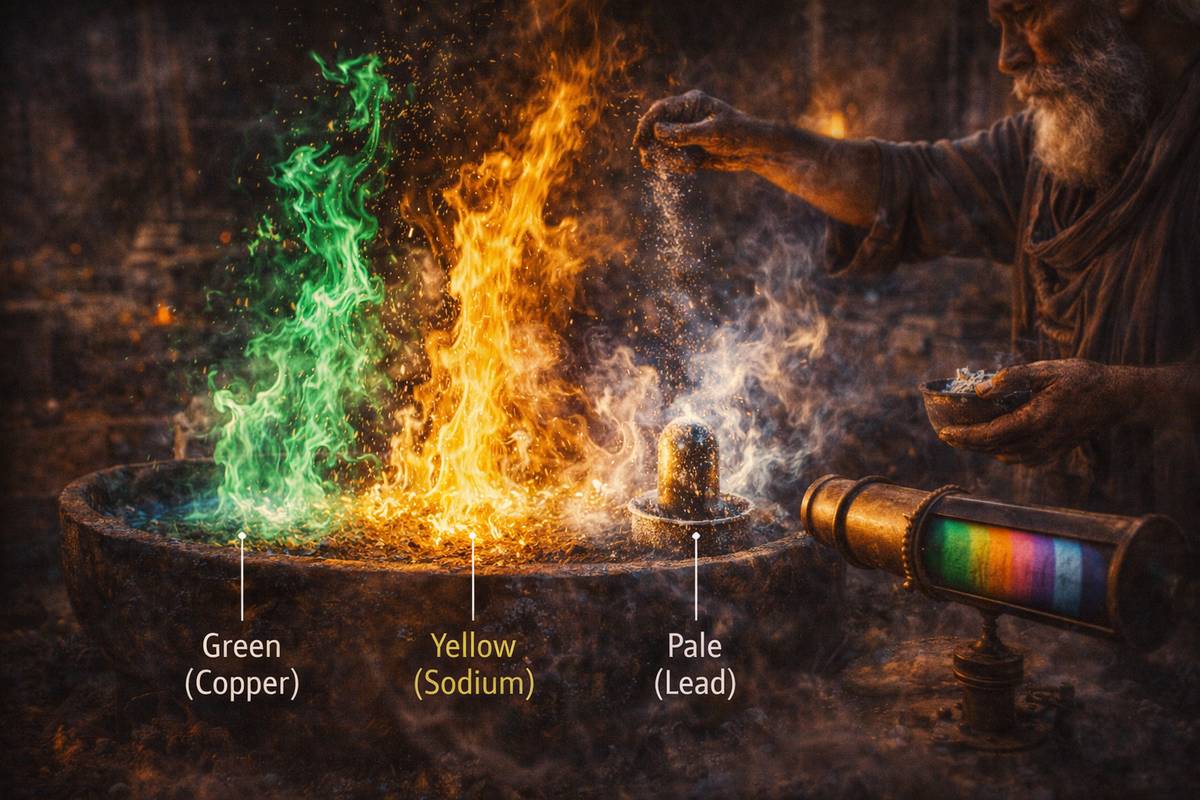
The Concept Different metals burn in different hues. For example, [...]