
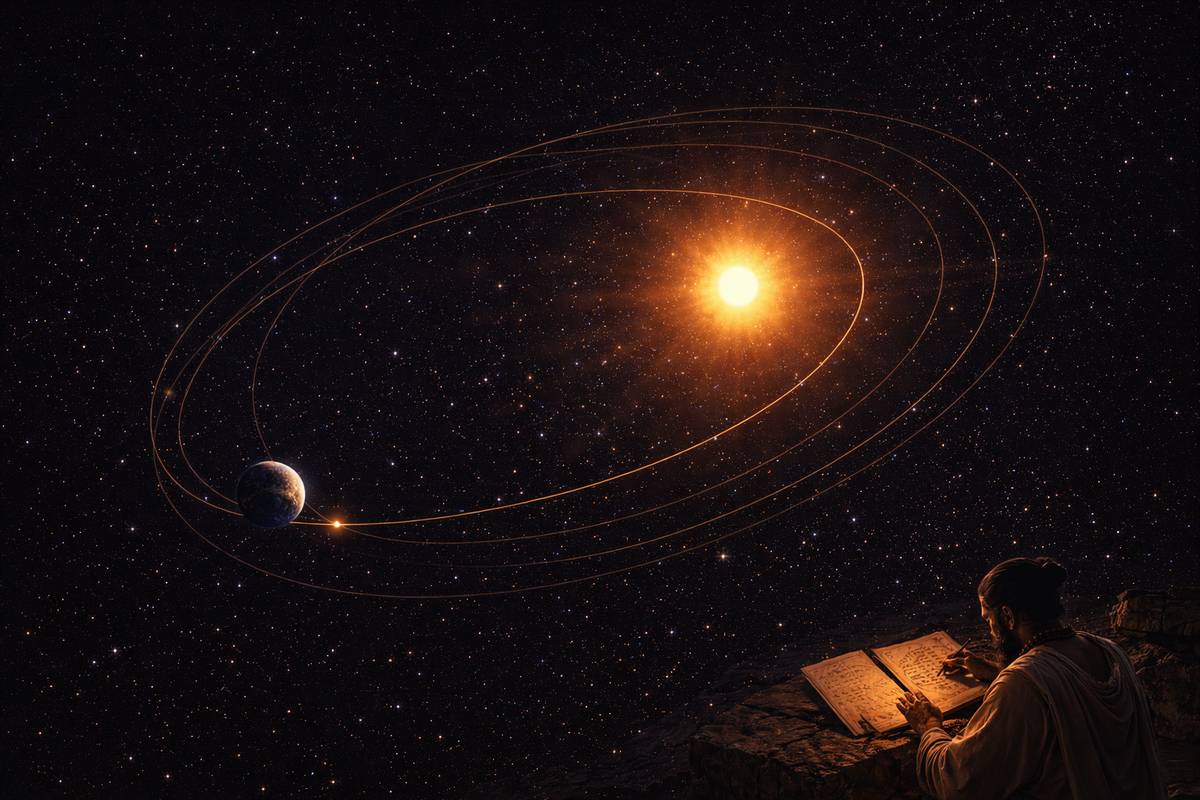
The Concept Orbits do not remain fixed; they shift and vary. According to the Surya Siddhanta, the Apogee, or the point at which a planet is the farthest from Earth, does not always remain constant. It advances slowly along the planet’s orbit. The text assigns each planet’s apogee a very low speed. This suggests you’re familiar with Apsidal Precession, which is the phenomenon in which an orbit’s entire elliptical loop spins in space over thousands of years.
The Story Orbits aren’t permanent tracks; they are shifting loops that spin slowly in space. This phenomenon, known as Apsidal Precession, was only recently understood in Western science, but the Surya Siddhanta had already assigned each planet’s “apogee” (farthest point) a specific, slow speed. They viewed these points as invisible “Deities” gently tugging on the planets—a beautiful metaphor for the gravitational perturbations caused by other worlds. This understanding of “moving orbits” is the very logic Einstein later used to prove General Relativity.
The Timeline
| Milestone | Details |
| Western Ref. |
c. 900 CE (Al-Battani) |
| Indian Source |
Surya Siddhanta (c. 10,000 BCE) |
| Chron. Gap |
Over 9,000 Years |
The Original Text
The Surya Siddhanta (1.41-42) explicitly notes these subtle shifts with the phrase ‘Praag gatistviha…’.
Related Innovations The Apsidal Line – This line joins the perigee and apogee and serves as the orbit’s axis. Source: Surya Siddhanta.
Fun Fact According to the Surya Siddhanta, these apogees are ‘Deities’ tugging on the planets. This is a metaphor for the gravitational perturbations that cause the precession.
The Modern Legacy This relates to general relativity. The first proof of Einstein’s theory was explaining why Mercury’s perihelion moves in an irregular pattern.
Recent Post
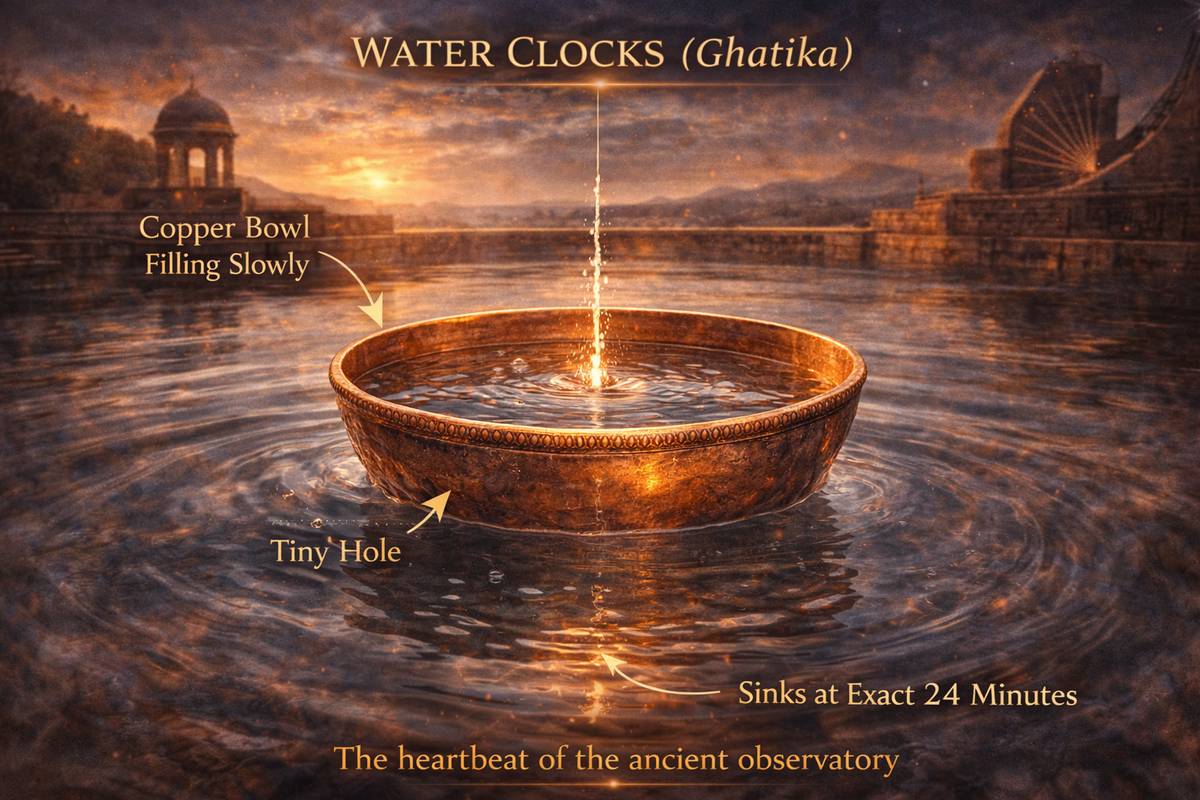
The Concept A water clock, for example, calculates time based [...]
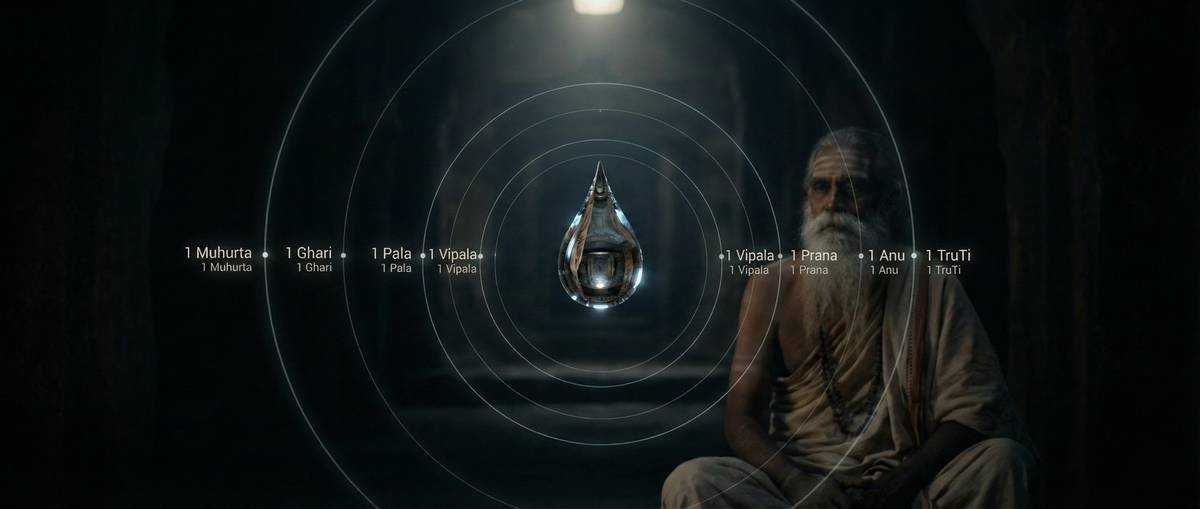
The Concept You may break time down into smaller and [...]