
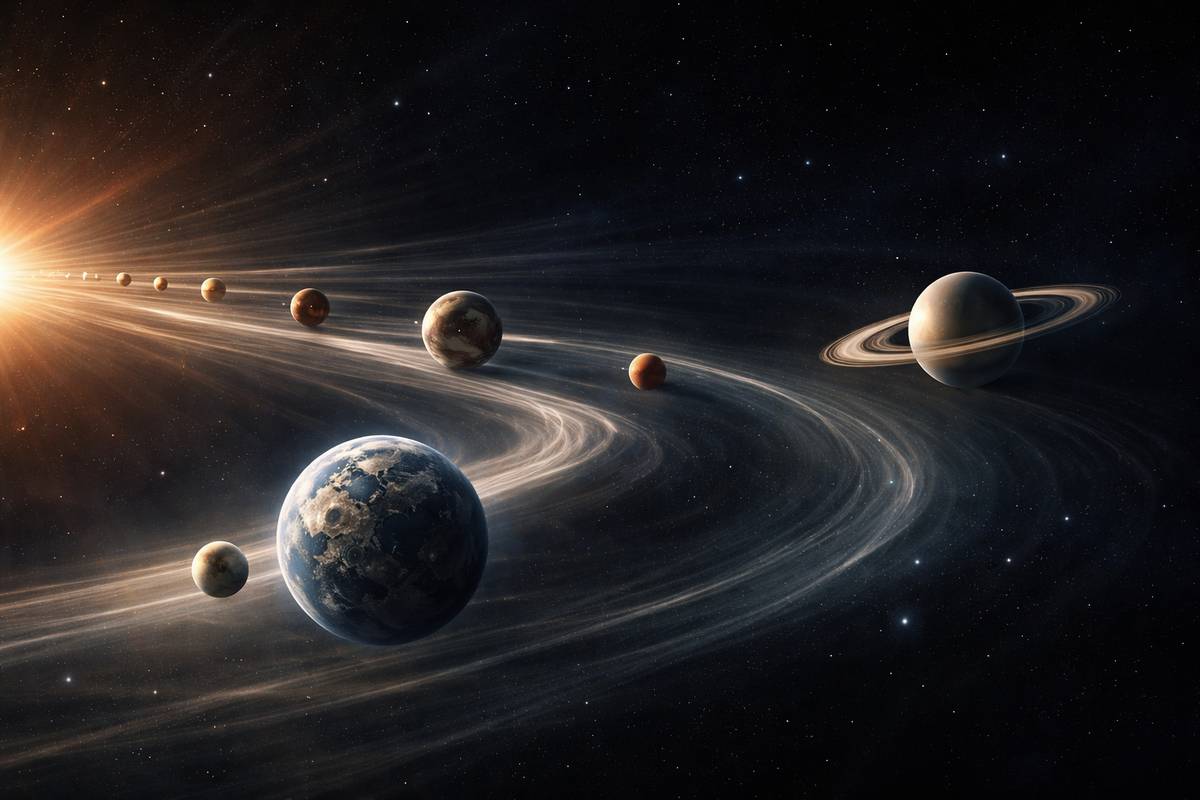
The Concept The Surya Siddhanta calculates the absolute distances of planets in Yojanas. It follows the Equal Linear Velocity Rule, which states that if all planets move at the same speed, those with longer periods (T) must have larger orbits (R). The text calculates the radius using the orbital period. It places the Moon closest and Saturn farthest, providing precise distances for each.
The Story How far is Saturn?. To answer this, Indian astronomers didn’t need a telescope; they used the “Equal Linear Velocity Rule”. They reasoned that if all planets move at the same speed, the ones that take longer to orbit must be on a much larger “track”. Using this logic, the Surya Siddhanta calculated the absolute distances of the planets in Yojanas. Their estimate for the Moon’s distance was remarkably close to the 384,400 kilometres measured by modern lasers today, proving that pure math could conquer the vacuum of space.
The Timeline
| Milestone | Details |
| Western Ref. |
1672 CE (Cassini – Mars Parallax) |
| Indian Source |
Vedic Period (Surya Siddhanta, 10,000 BCE) |
| Chron. Gap |
Over 11,000 Years |
The Original Text
The Surya Siddhanta (12.80) utilizes the concept of ‘Bhanorkaksha yojanaani…’ to calculate these immense distances.
Related Innovations Universe Sphere: Calculating the circumference of the cosmos based on solar ray travel. Source: Surya Siddhanta.
Fun Fact The text states that the Sun is approximately 4.3 million Yojanas away, indicating an attempt to estimate the ‘Astronomical Unit’ thousands of years before Europe.
The Modern Legacy This marks the beginning of Cosmological Distance Ladders, which measure the size of the cosmos from Earth.
Recent Post
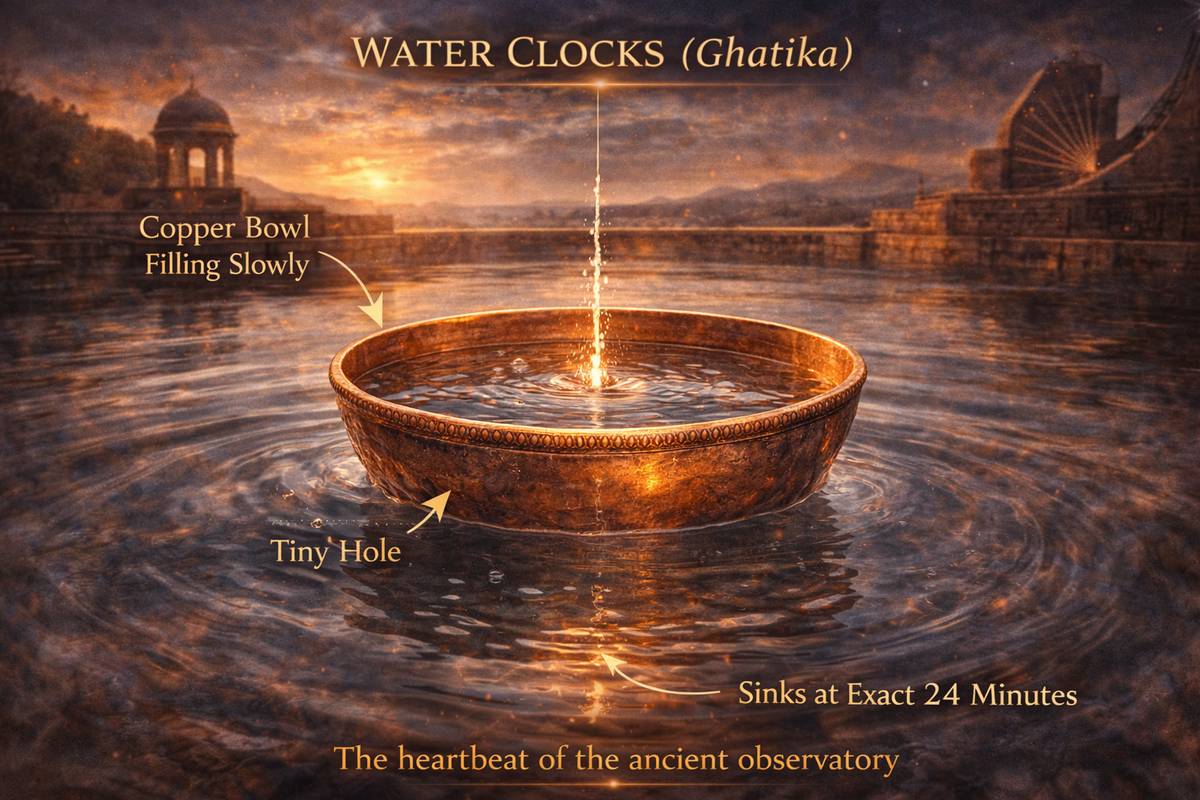
The Concept A water clock, for example, calculates time based [...]
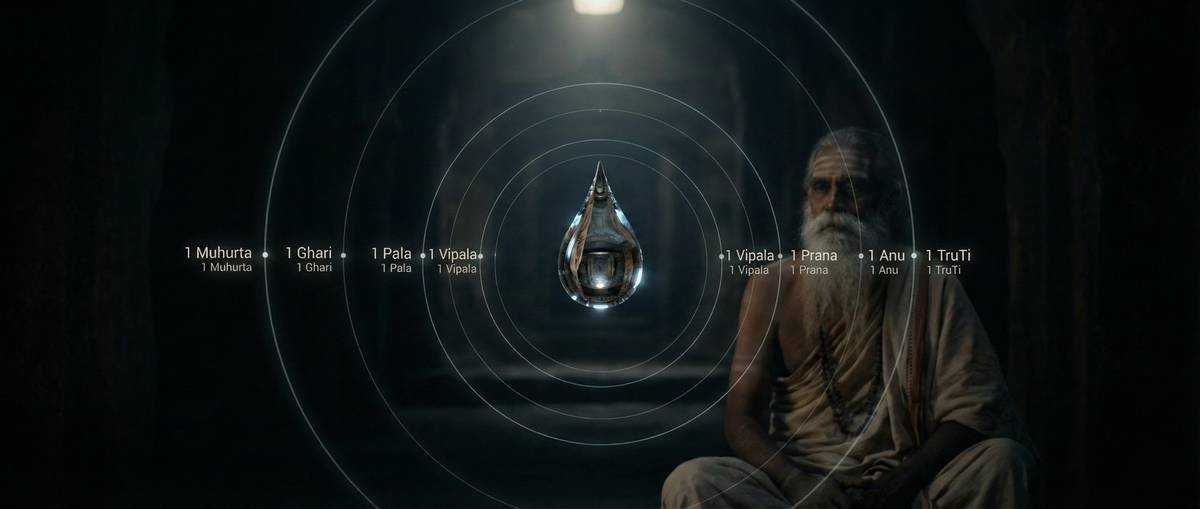
The Concept You may break time down into smaller and [...]