
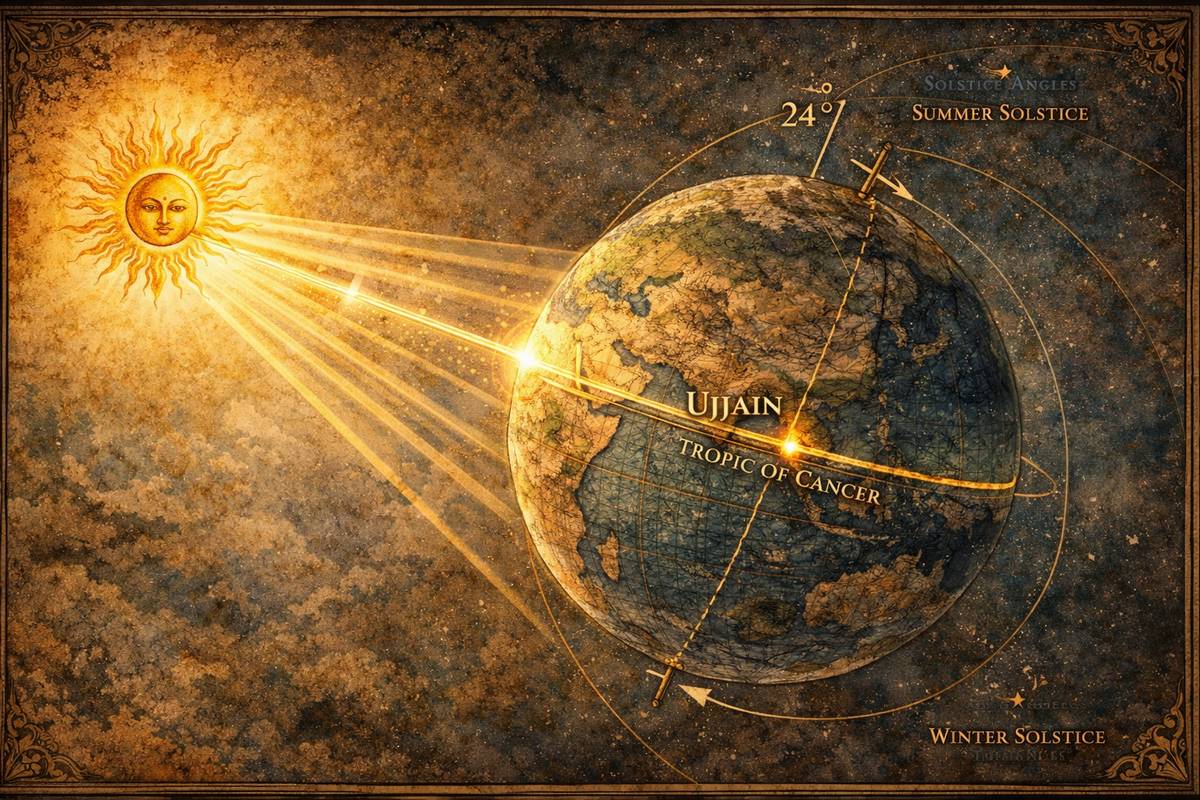
The Concept According to the Surya Siddhanta, the equator forms a 24-degree angle with the Sun’s path (ecliptic). The seasons are determined by this number, Parama Kranti. Ancient astronomers utilised this angle to calculate the length of days, the length of noon shadows at each latitude, and when the Solstices occurred.
The Story Why do the days grow long in summer and short in winter? The Surya Siddhanta answered this with a single, precise number: 24 degrees. This is the Parama Kranti, or the Earth’s axial tilt. While Greek astronomers like Eratosthenes later calculated a similar angle, Indian Rishis had already baked this 24-degree tilt into their sine tables, allowing them to predict the exact length of a noon shadow on any day of the year at any latitude. This wasn’t just math; it was a “Time Capsule” hidden in the stars, proving their observations were recorded when the Earth’s wobble was at that exact angle over 10,000 years ago.
The Timeline
| Milestone | Details |
| Western Ref. |
c. 240 BCE (Eratosthenes) |
| Indian Source |
Vedic Period (Surya Siddhanta) |
| Chron. Gap |
Over 9,000 Years |
The Original Text
Surya Siddhanta (2.28) provides the details of this measurement: ‘Trirashijyaakhila…’.
Related Innovations Declination Tables: Determine where the Sun is exactly North/South each day of the year. Source: Surya Siddhanta.
Fun Fact The Earth’s tilt varies over 41,000 years. It was last near 24 degrees around 10,000 years ago. This is the astronomical timestamp of the Surya Siddhanta.
The Modern Legacy Understanding axial tilt is critical to climatology since it explains the causes of seasonal fluctuations such as summer and winter.
Recent Post
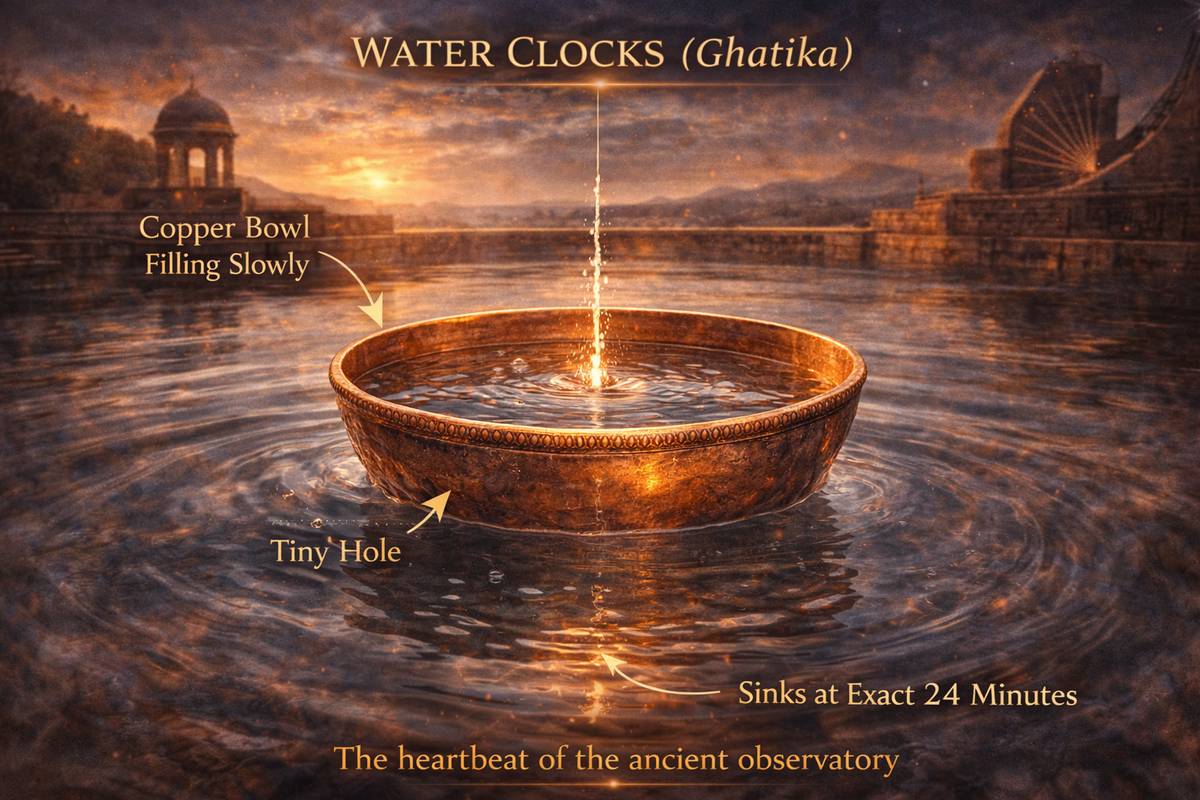
The Concept A water clock, for example, calculates time based [...]
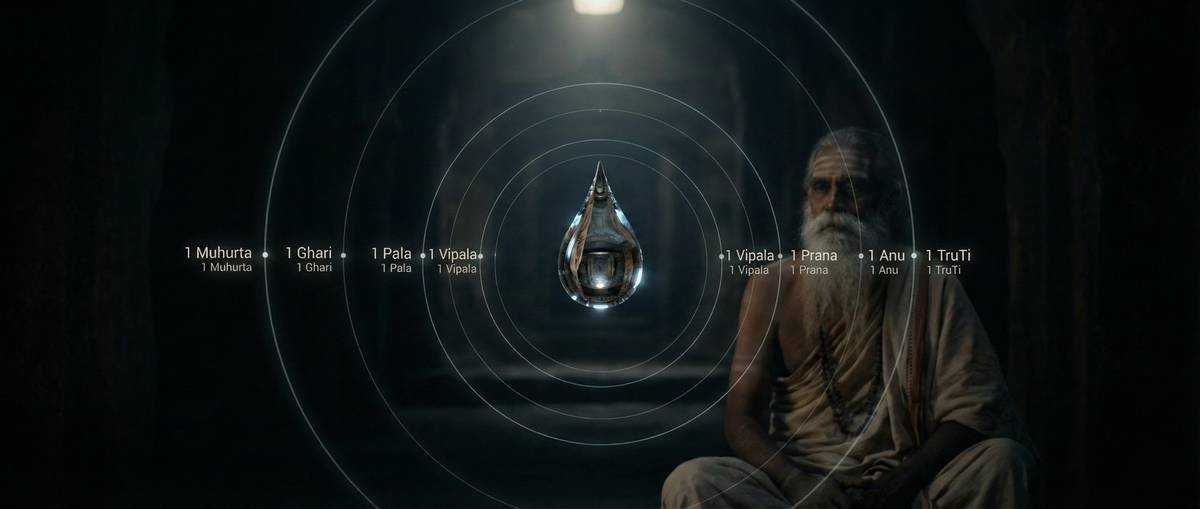
The Concept You may break time down into smaller and [...]