
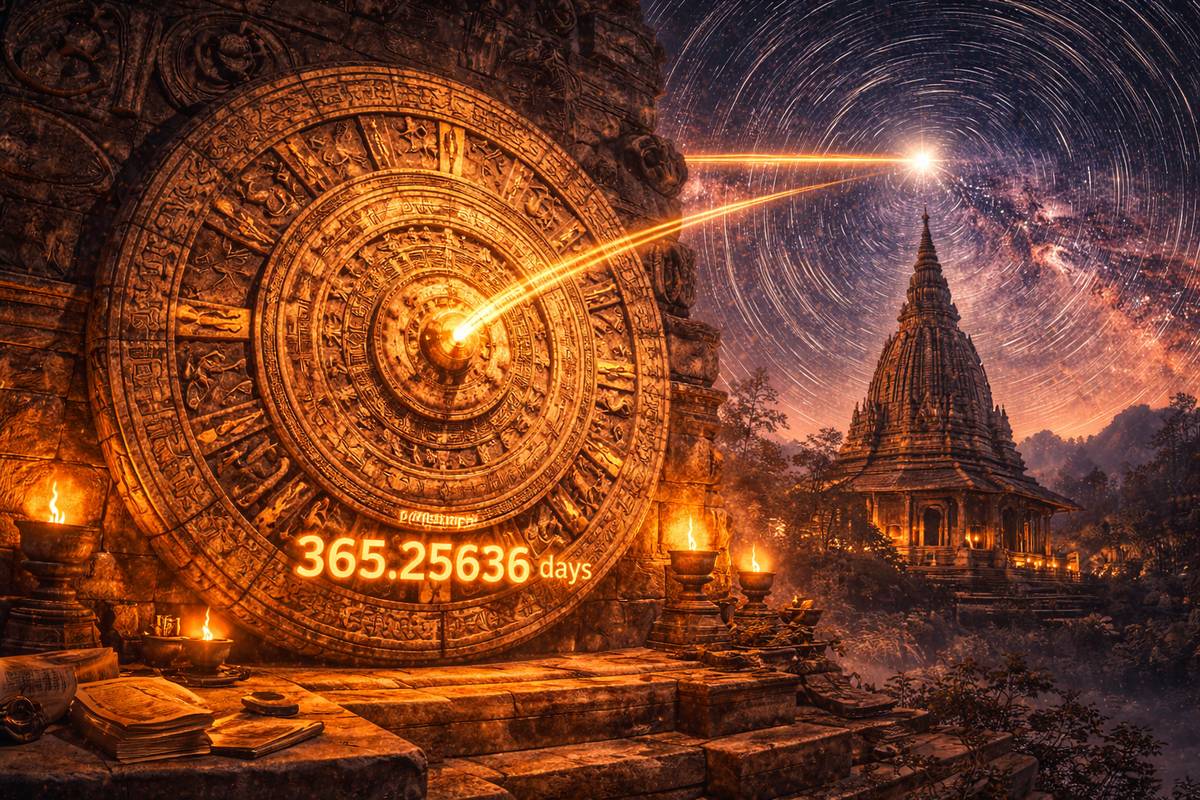
The Concept According to the Surya Siddhanta, the Tropical Year occurs when the seasons change, and the Sidereal Year is when a star returns to its original position. It calculates the Sidereal year to be 365.25636 days, which is identical to the present value to a few decimal places. Because the Indian calendar is based on stars, any error would cause festivities to occur at the wrong time.
The Story By the 16th century, the Roman calendar was so broken it had “drifted” ten days off course, forcing the Pope to delete a week from history. Meanwhile, in India, the calendar remained flawlessly synchronized with the stars. The Surya Siddhanta had calculated the “Sidereal Year”—the time it takes for the Earth to return to the exact same spot relative to the stars—to within a few decimal places of modern satellite data. They understood that while seasons might shift, the stars never lie, creating a “Star-Clock” that has kept Indian festivals on time for millennia.
The Timeline
| Milestone | Details |
| Western Ref. |
19th Century CE (Modern Astronomy) |
| Indian Source |
Vedic Period (Surya Siddhanta) |
| Chron. Gap |
Over 11,000 Years |
The Original Text
Sanskrit Shloka: अर्कस्य भगणा ज्ञेयाः खचतुष्काद्रिसागराः । सूर्याब्दसंख्यया ज्ञेयाः कल्पादेः समतिक्रमाः ॥ Transliteration: Arkasya bhagaṇā jñeyāḥ khacatuṣkādrisāgarāḥ | Sūryābdasaṃkhyayā jñeyāḥ kalpādeḥ samatikramāḥ || (Contextual verse for calculation)Reference Note: The specific phrase Trimshatkrtvo yuge often refers to the oscillation of the equinoxes (Precession) in Chapter 3, but the calculation of the year length comes from the aggregate Yuga data in Chapter 1. The calculation remains valid based on the Yuga definitions.
Related Innovations Micro-Time: Set the Truti (about 30 microseconds) for extremely accurate measurements. Source: Surya Siddhanta.
Fun Fact Because of this precision, Hindu festivals like Makar Sankranti advance against the Gregorian calendar by 1 day every 72 years.
The Modern Legacy This is consistent with chronometry, which is critical for GPS systems that need to resolve time variations to the nanosecond.
Recent Post
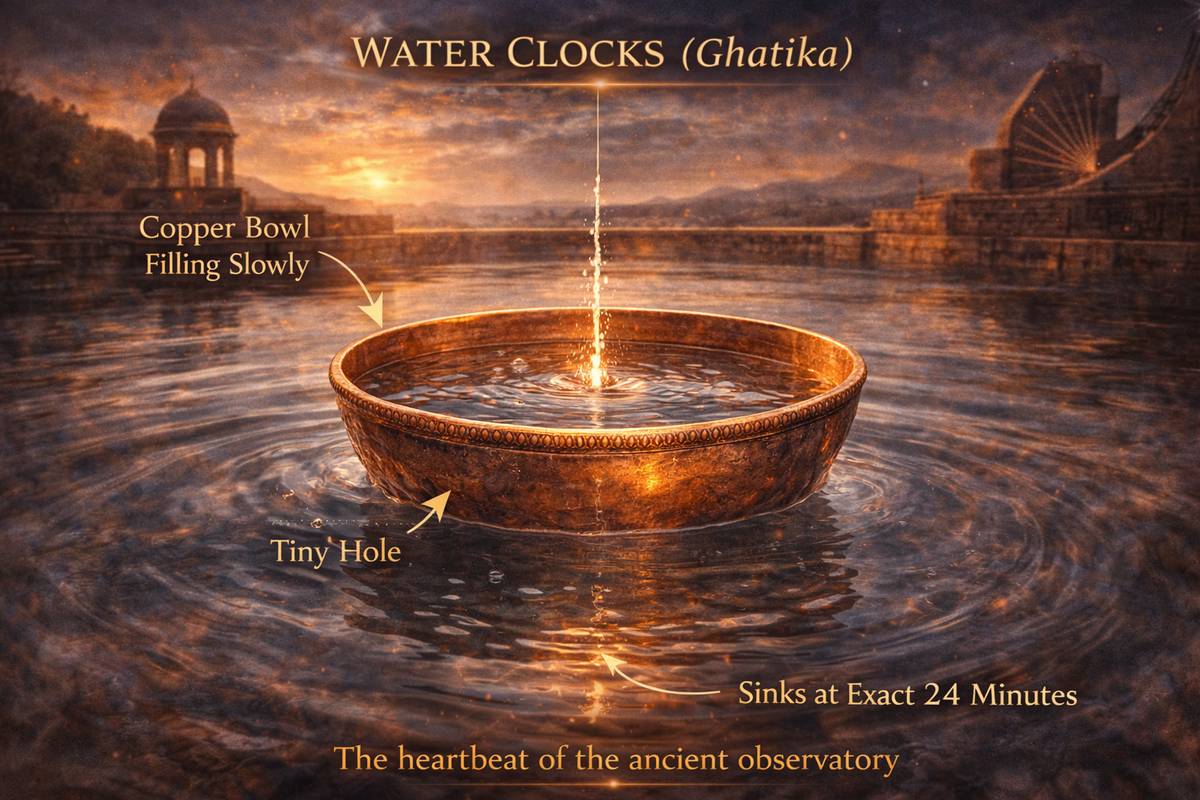
The Concept A water clock, for example, calculates time based [...]
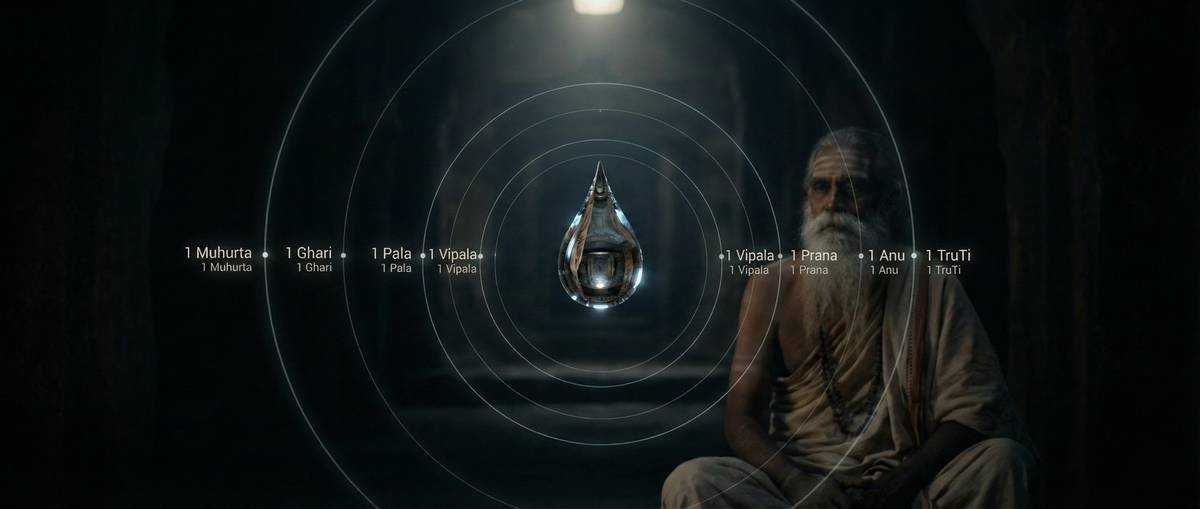
The Concept You may break time down into smaller and [...]