
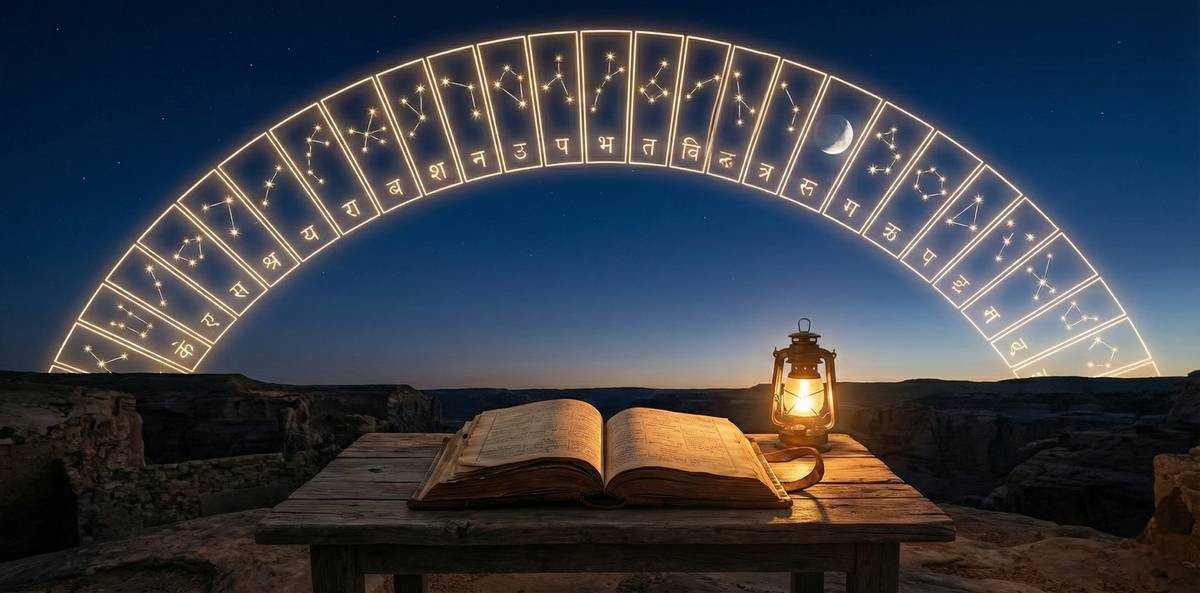
The Concept The zodiac consists of a 360-degree circle rather than merely twelve signs. To acquire an accurate reading of the Moon (which moves faster than the Sun), you need smaller divisions. The Nakshatras divide the sky into 27 pieces, each 13.33 degrees.
The Story While the Greeks and Babylonians were content with the 12 signs of the Zodiac, Indian astronomers realized that the Sun’s path was too broad a brush for the fast-moving Moon. To track the Moon’s nightly journey with pinpoint accuracy, they divided the sky into 27 “Lunar Mansions” or Nakshatras. Each Nakshatra represented a specific star cluster where the Moon “stayed” for a night. This system, recorded in the Taittiriya Samhita long before 10,000 BCE, created a celestial coordinate system so precise that it allowed for “Star Dating” of historical events that occurred tens of thousands of years ago. It was the world’s first high-resolution map of the night sky.
The Timeline
| Milestone | Details |
| Western Ref. |
None (Unique to Indian/Asian astronomy) |
| Indian Source |
Prior to 10,000 BCE (Taittiriya Samhita) |
| Chron. Gap |
Indigenous Innovation |
The Original Text
The Taittiriya Samhita (4.4.10) systematically lists all 27 Nakshatras starting with Krittika.
Related Innovations The Vedanga Jyotisha established the Navatara system of 27 stars, while the Surya Siddhanta added the 28th intercalary star, Abhijit (Vega), for even more precise time corrections.
Fun Fact The Moon orbits the Earth in approximately 27.3 days, spending one day in each Nakshatra. This is where the concept of ‘Lunar Month’ originated.
The Modern Legacy This is the same as Sidereal Astronomy and the International Celestial Reference Frame (ICRF), which uses fixed quasars and stars to navigate.
Recent Post
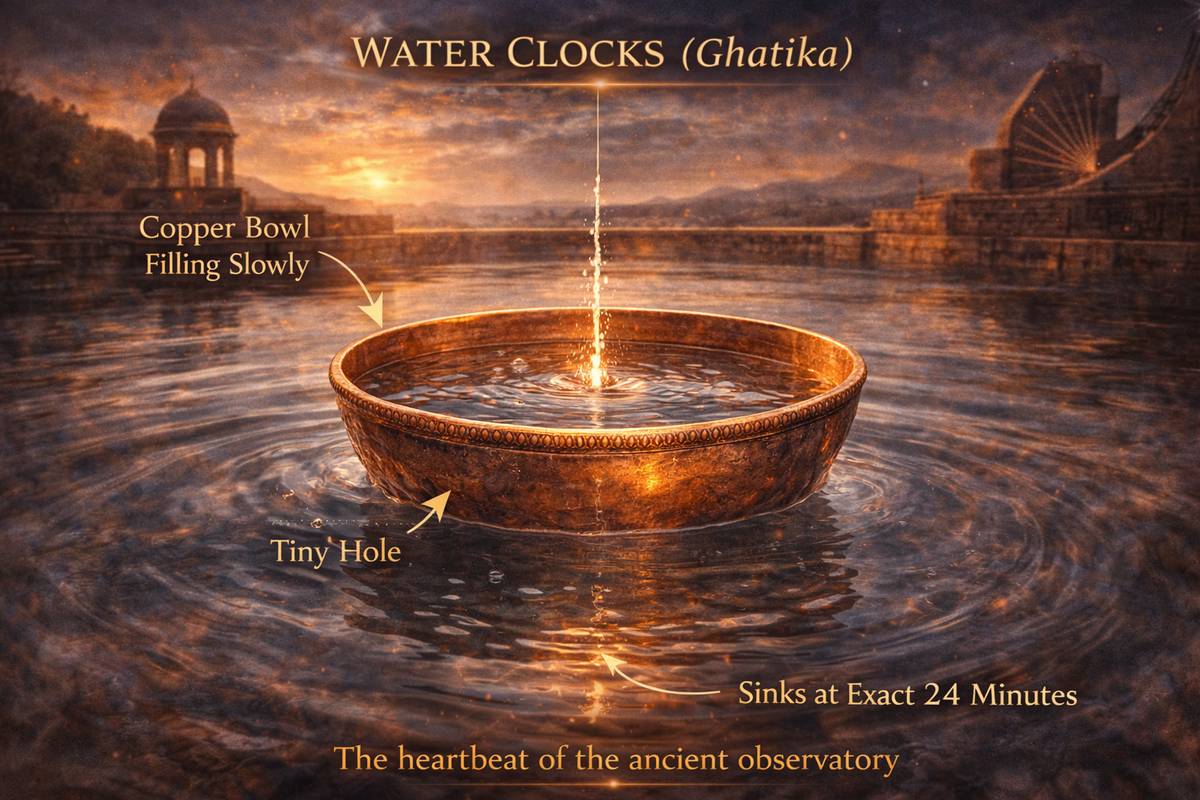
The Concept A water clock, for example, calculates time based [...]
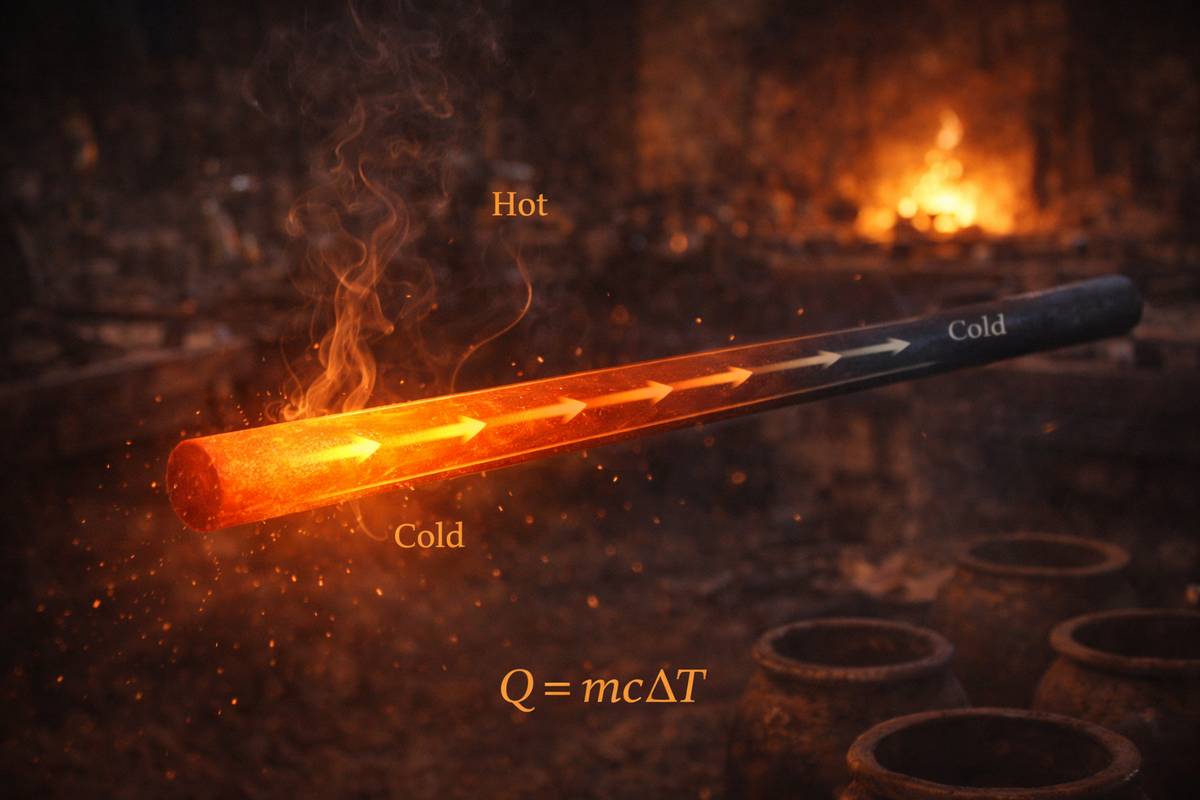
The Concept Old European science considered heat to be a [...]