
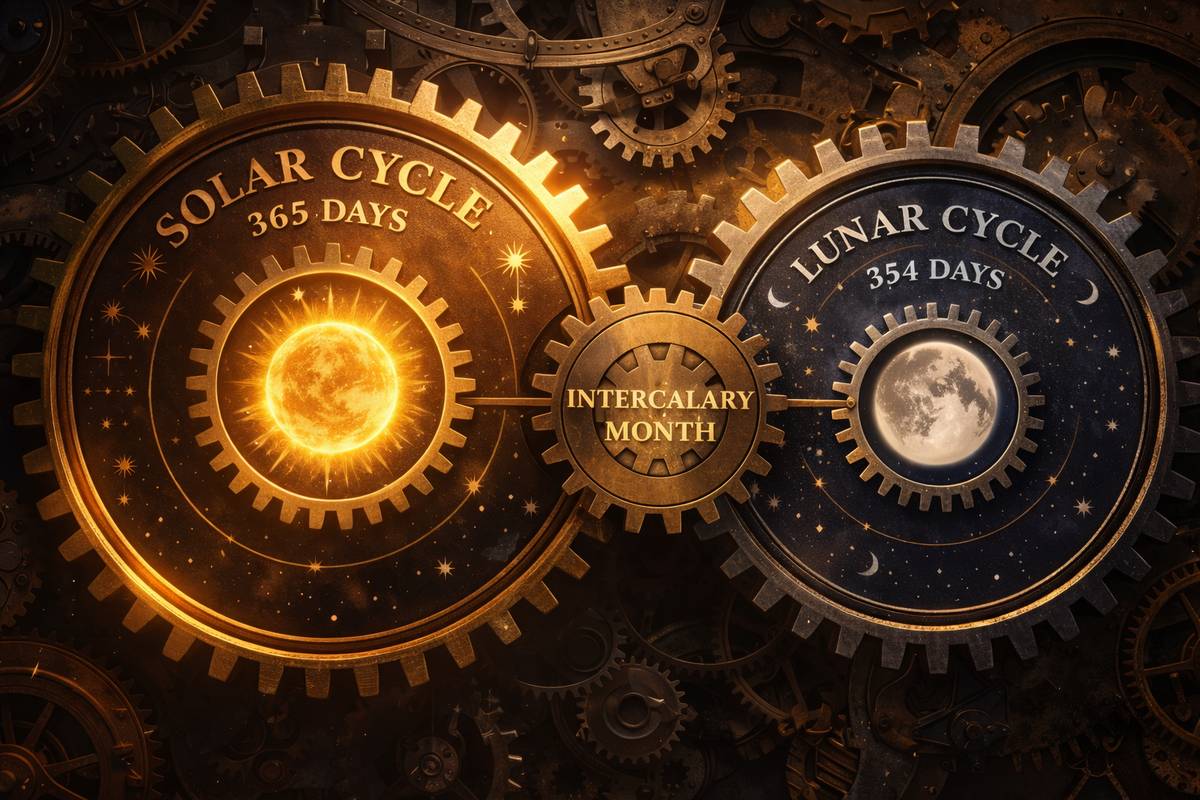
The Concept The lunar cycle (354 days) and the solar cycle (365 days) do not match. You need to synchronise them.
The Story The Moon and the Sun are like two clocks that never quite match—the lunar year is 11 days shorter than the solar year. If left unchecked, your harvest festivals would eventually drift into the middle of winter. To solve this, the Vedanga Jyotisha (1,400 BCE) introduced the Adhika Masa, or “extra month,” added every three years to snap the two calendars back together. This “Intercalary” mathematics ensured that the Indian calendar remained perfectly synced with both the phases of the moon and the cycle of the seasons for five millennia.
The Timeline
| Milestone | Details |
| Western Ref. |
46 BCE (Julian Calendar reform) |
| Indian Source |
Prior to 1,400 BCE (Vedanga Jyotisha) |
| Chron. Gap |
Over 1,400 Years |
The Original Text
Sanskrit Shloka: द्व्यूनं द्विषष्टिभागेन दिनं सौराच्च पार्वणम् । यत्कृतावुपजायेते मध्येऽन्ते चाधिमासकौ ॥ Transliteration: Dvyūnaṃ dviṣaṣṭibhāgena dinaṃ saurācca pārvaṇam | Yatkṛtāvupajāyete madhye’nte cādhimāsakau || Vedanga Jyotisha (Verse 1) Meaning: “The lunar day is shorter than the solar day… In a Yuga (5 years), two Intercalary Months (Adhimasakau) are produced, one in the middle and one at the end.”
Related Innovations Around 1,400 BCE, the Vedanga Jyotisha developed a sophisticated Luni-Solar Calendar to track both the seasons and the phases of the Moon. Later literature, such as the Romaka Siddhanta, employed the 19-year ‘Metonic Cycle’ to periodically synchronise solar and lunar years.
Fun Fact Diwali is always celebrated on a new Moon, but it never shifts to June; instead, it takes place in October and November.
The Modern Legacy Standardising time and calendar systems.
Recent Post
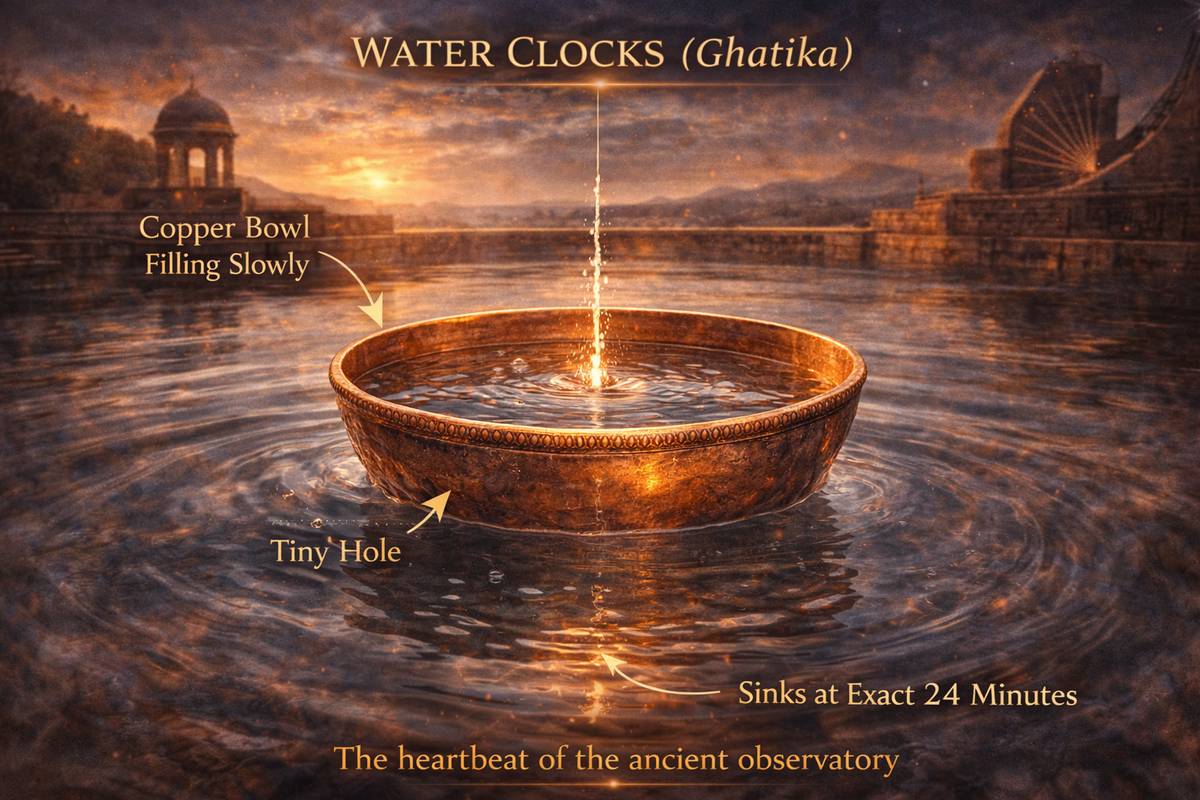
The Concept A water clock, for example, calculates time based [...]
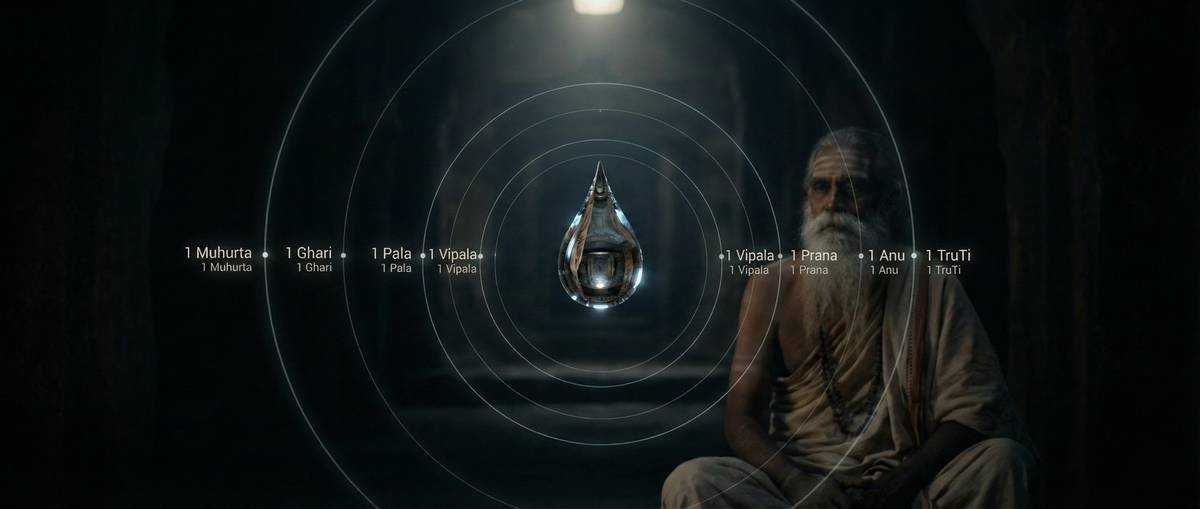
The Concept You may break time down into smaller and [...]