

The Concept Planets do not move in a straight line; rather, they move upward and downward. The Surya Siddhanta calculates celestial latitude (Vikshepa), which is the distance of a planet from the Ecliptic to the north or south. It provides the maximum inclination angles for each planet. Without this 3D computation, it is impossible to know whether a planet would ‘collide’ (occult) with a star or simply pass over it.
The Story To the casual observer, planets seem to move in a flat line across the sky, but the Indian astronomers of the Surya Siddhanta knew better. They realized that the solar system isn’t a 2D map, but a 3D stage where planets “dance” up and down. While Western models like Ptolemy’s struggled to explain why planets didn’t always follow the same path, the Indians developed Vikshepa—a trigonometric calculation for celestial latitude. They could predict “occultations,” knowing exactly when one planet would slide behind another or just miss it by a hair. It was 3D spatial geometry perfected over 10,000 years ago.
The Timeline
| Milestone | Details |
| Western Ref. |
c. 150 CE (Ptolemy) |
| Indian Source |
Vedic Period (Surya Siddhanta) |
| Chron. Gap |
Over 10,000 Years |
The Original Text
Sanskrit Shloka: विक्षेपो नास्ति दिनकृन्मण्डले आयने सदा । विक्षिप्यन्ते तु पतिताः स्वस्मात् स्वस्मात् स्वमण्डलात् ॥
Transliteration: Vikṣepo nāsti dinakṛnmaṇḍale āyane sadā | Vikṣipyante tu patitāḥ svasmāt svasmāt svamaṇḍalāt || (Reconstructed meaning from Surya Siddhanta, verses 1.68-70)
Meaning: “There is no latitude (Vikshepa) for the Sun in its path (ecliptic). However, the other planets are deflected from their own orbits (relative to the ecliptic) by the nodes.”
Related Innovations Visibility Corrections – Changing the predicted times when planets rise based on their distance from the equator. Source: Surya Siddhanta.
Fun Fact The text is correct in saying that the Sun has zero latitude because the Ecliptic is the Sun’s path and the reference plane for the entire system.
The Modern Legacy This is extremely critical for space navigation. If a Mars rover did not consider the angle of its orbit, it would totally miss the planet.
Recent Post
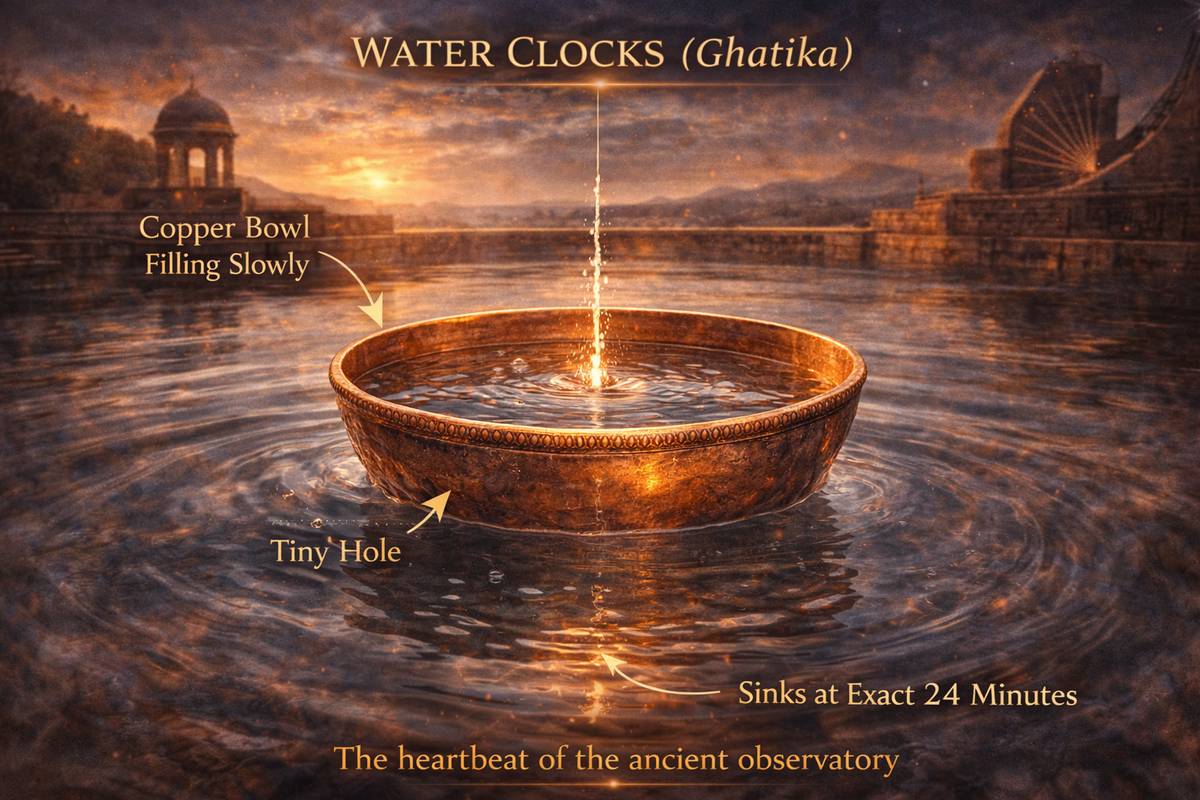
The Concept A water clock, for example, calculates time based [...]
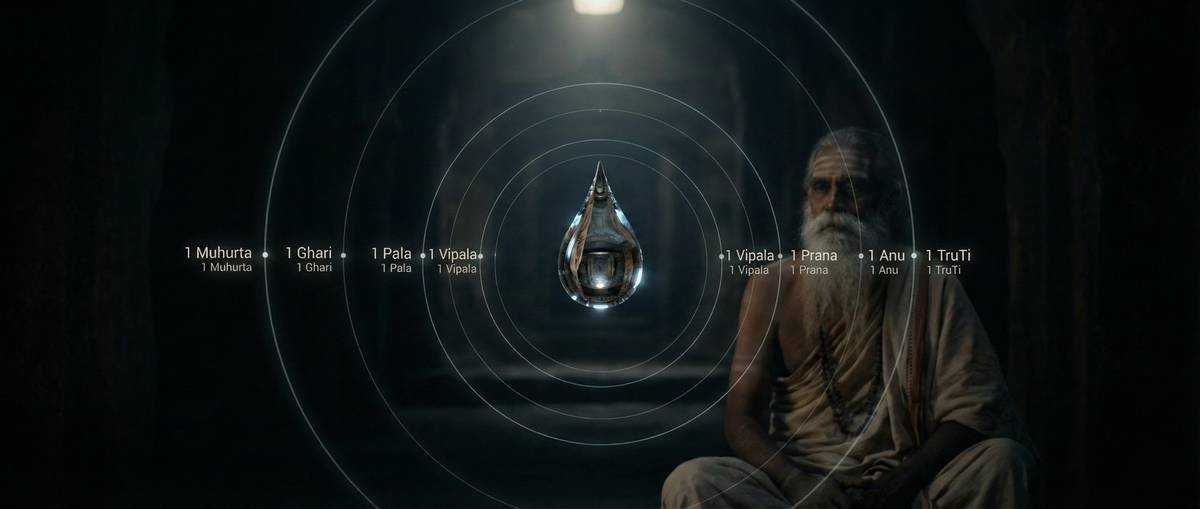
The Concept You may break time down into smaller and [...]