
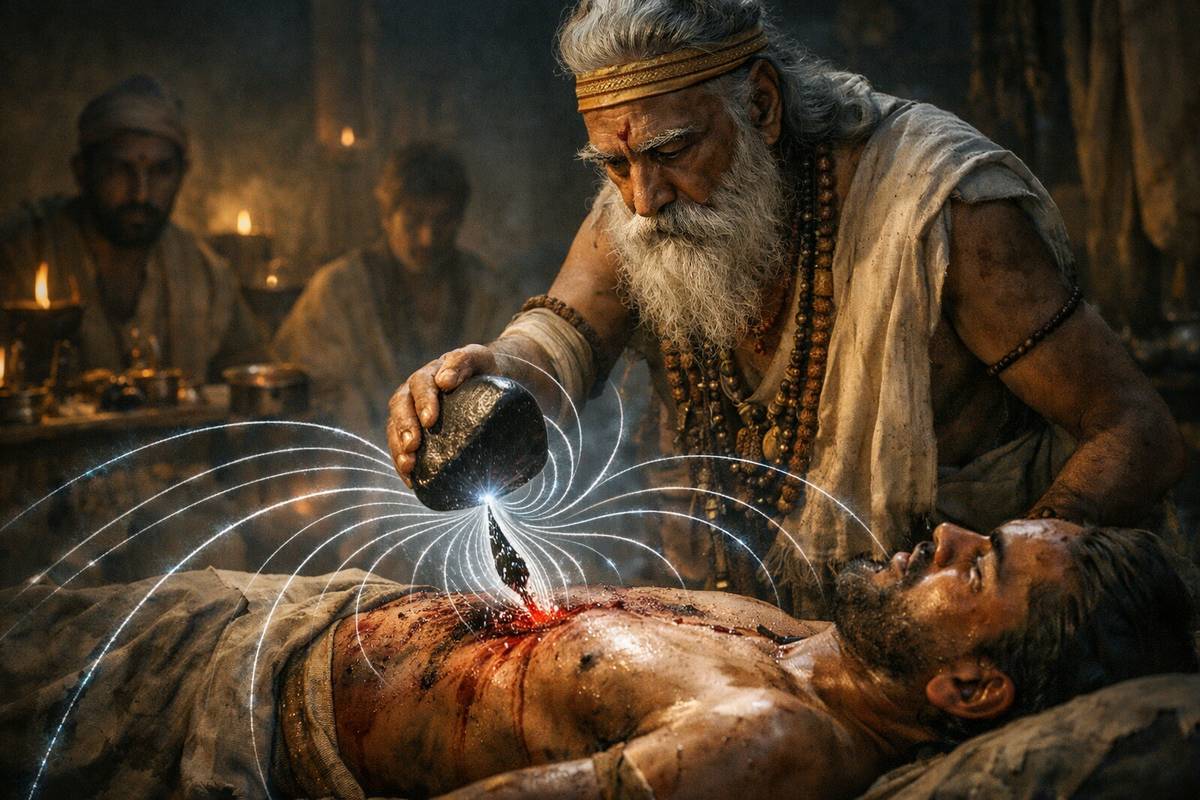
The Concept Some stones, such as lodestones, draw iron towards them. This invisible force is magnetism.
The Story Long before the compass revolutionized navigation, Indian surgeons were using the “invisible hand” of magnetism to save lives. They called the magnet Ayaskanta, which literally means “Beloved of Iron”. In the Sushruta Samhita, the father of surgery documented how to use these special stones to pull iron arrowheads and metal fragments out of deep wounds where a scalpel couldn’t reach. While the West viewed magnets as a curiosity for hundreds of years, India had already turned them into a life-saving medical instrument.
The Timeline
| Milestone | Details |
| Western Ref. |
600 BCE (Thales – Observation) |
| Indian Source |
Prior to 5,000 BCE (Sushruta Samhita – Application) |
| Chron. Gap |
Contemporary / Practical Precedence |
The Original Text
Sanskrit Shloka: अनुशस्त्राणि तु… अयस्कान्त… प्रभृतीनि । एतान्ययस्कान्तादीनि शल्योद्धरणार्थमुपदिशेत् ॥ Transliteration: Anuśastrāṇi tu… ayaskānta… prabhṛtīni | Etānyayaskāntādīni śalyoddharaṇārthamupadiśet || Sushruta Samhita (Sutra Sthana 7.14) (Lists magnet as a tool for extraction). Meaning: “The supplementary instruments include… the Magnet (Ayaskanta), etc. These magnets and others are indicated for the purpose of extracting foreign bodies (shalya).”
Related Innovations The Yantra-arnava, a mediaeval navigation text, mentioned the Matsya Yantra (magnetised iron fish) as a technique to navigate at sea. The Rasaratna Samuccaya (c. 1300 CE) discussed how to use magnets to distinguish iron varieties from other dark ores.
Fun Fact Adi Shankara later used the magnet as a metaphor, stating, ‘The magnet moves the iron without moving itself; the soul moves the body.’ .
The Modern Legacy Magnetism powers our electric motors, MRI equipment, and computer hard drives.
Recent Post

The Concept Yoga demonstrates that the autonomic nervous system may [...]
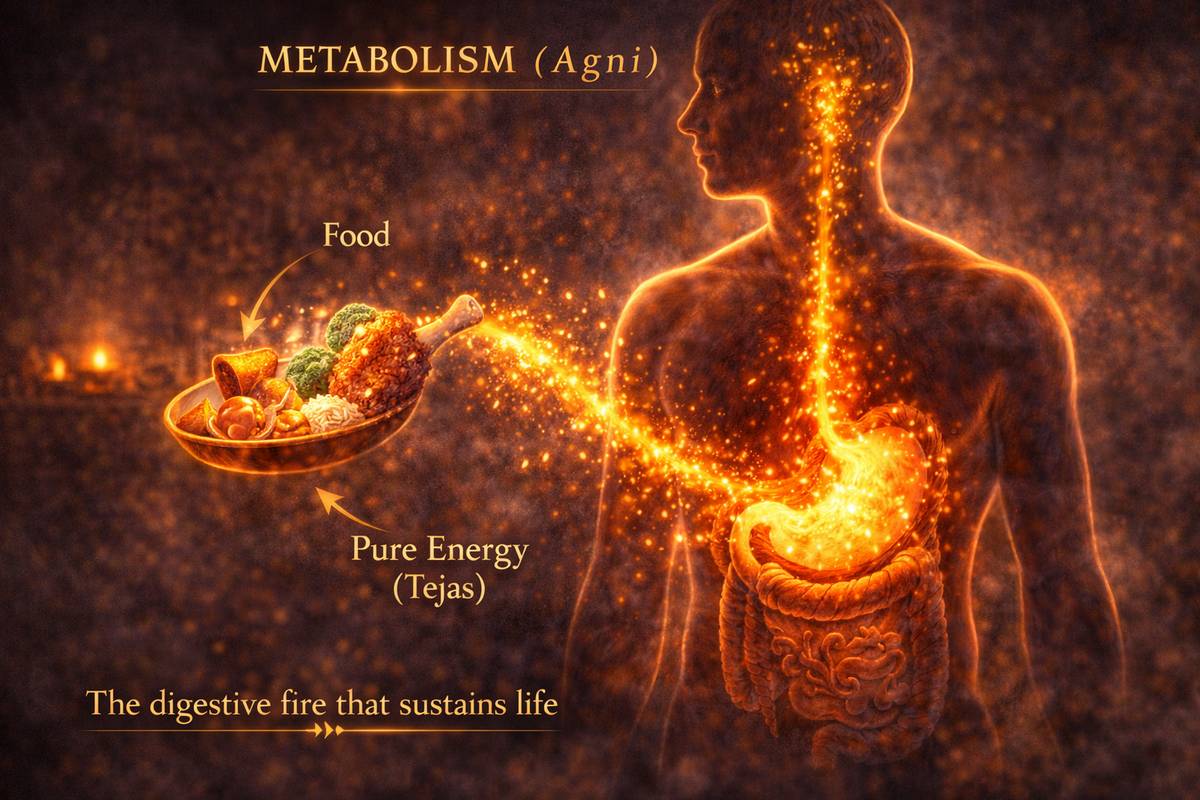
The Concept The body functions as an engine, burning fuel [...]