
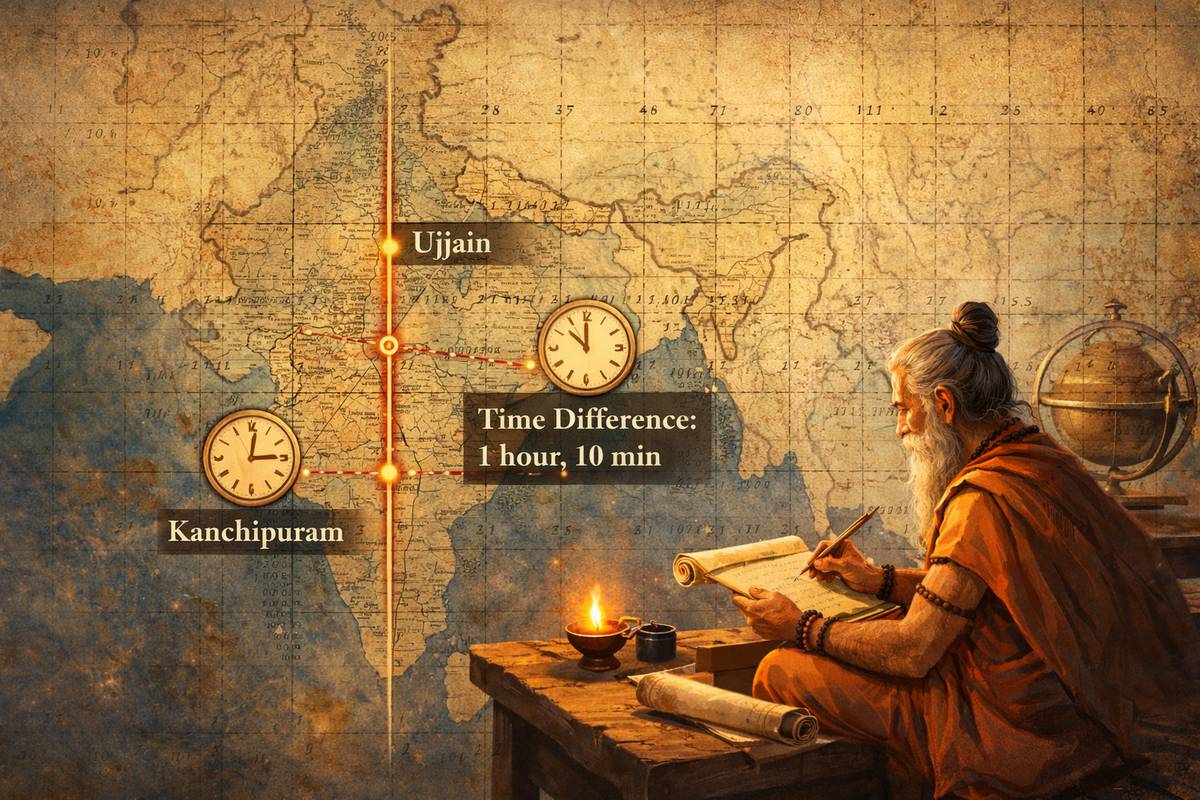
The Concept To create an Earth map, you’ll need a grid: Longitude (East-West) and latitude (North-South).
The Story Imagine trying to draw a map of the world without a single reference point. While Europe was still debating the edges of the Earth, Indian scholars had already draped a mathematical grid over the globe. They established the world’s first Prime Meridian passing through the observatory of Ujjain and the equator at Lanka. By calculating Deshantara (the difference in space), they could adjust their clocks for any city on the planet. Long before the Greenwich Meridian was even a thought, Ujjain was the “City of Time,” serving as the heartbeat of global geography and navigation.
The Timeline
| Milestone | Details |
| Western Ref. |
1884 CE (Greenwich established as Prime Meridian) |
| Indian Source |
Prior to 10,000 BCE (Surya Siddhanta / Aryabhata) |
| Chron. Gap |
Over 11,000 Years |
The Original Text
Sanskrit Shloka: तदेशान्तरनाड्यो ह्युदयादिषु ये गताः । लङ्कायामर्कुदये भवन्ति यतो दिनकरस्य ॥ योजनानि तथा षष्टिः प्रतिदेशान्तरं गतिः । Transliteration: Tadeśāntaranāḍyo hyudayādiṣu ye gatāḥ | Laṅkāyāmarkudaye bhavanti yato dinakarasya || Yojanāni tathā ṣaṣṭiḥ pratideśāntaraṃ gatiḥ | Surya Siddhanta (1.60-61) Meaning: “The difference in time (Nadis) arising from the difference in longitude… For every sixty Yojanas of longitude, the difference in time is one Pala (Vighati).”
Related Innovations The Surya Siddhanta established the world’s first Prime Meridian (Madhyarekha), connecting Lanka, Ujjain, and the North Pole. It also provided Desantara methods for calculating local time based on the observer’s specific longitude.
Fun Fact Prior to Greenwich, Ujjain was known as the ‘Greenwich of the East’. It was where all Asian timekeeping originated.
The Modern Legacy World time zones and GPS.
Recent Post
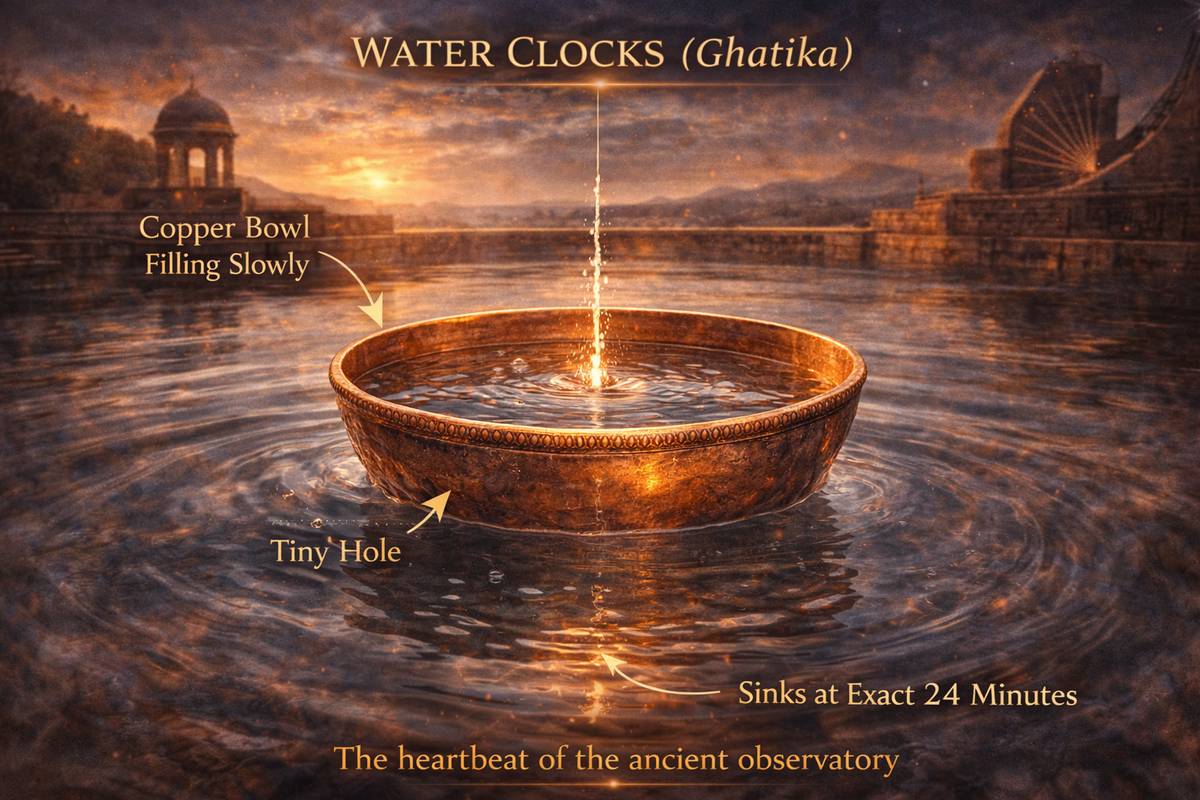
The Concept A water clock, for example, calculates time based [...]
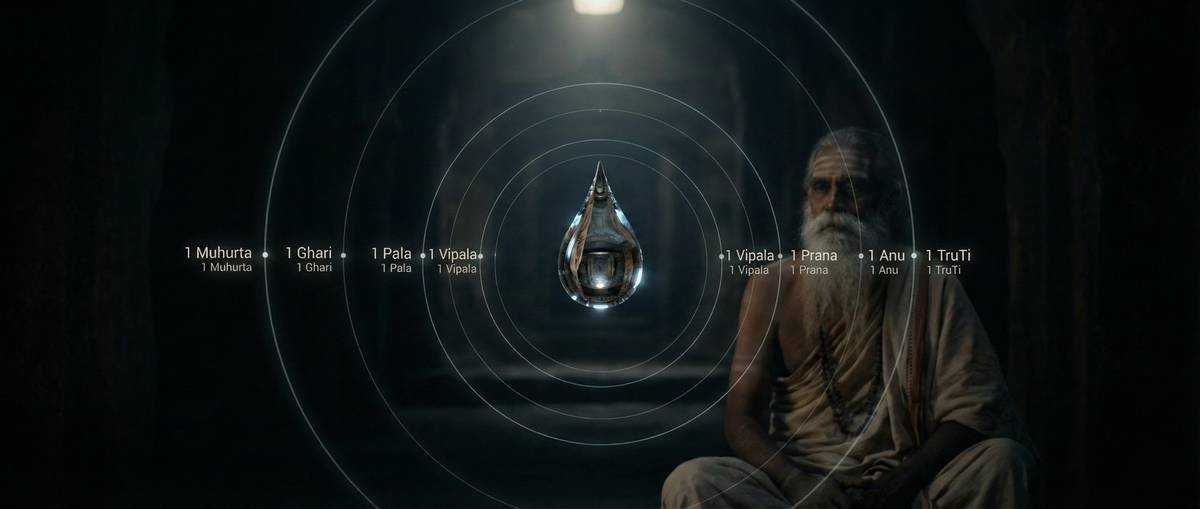
The Concept You may break time down into smaller and [...]