
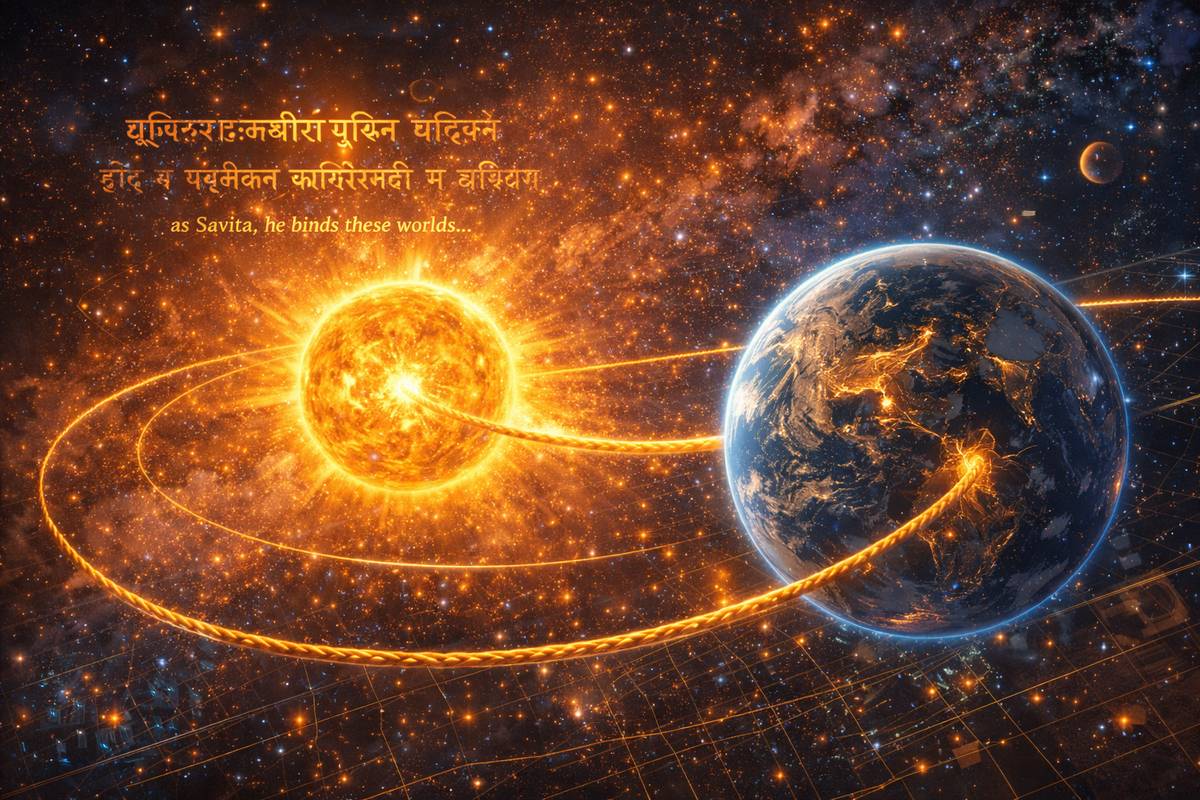
The Concept Heliocentrism is the notion that the Sun is at the centre of the solar system, with Earth and other planets orbiting it. This is the polar opposite of the ‘Geocentric’ concept, which held that the Earth was at the centre of everything and was the most popular idea in Europe for a millennium.
The Story Thousands of years before Copernicus was threatened by the Church for saying the Earth moves, the Rig Veda had already described the Sun as the “center” that holds the Earth in place with “bonds of light”. While Europe remained trapped in a “Geocentric” world where everything revolved around a flat Earth, the Indian astronomer Aryabhata was calculating the orbits of planets with the Sun at the heart of the system. He saw the Sun as a cosmic charioteer, dragging the planets behind him. It was a lyrical, beautiful, and mathematically sound vision of the solar system that was chanted in India for millennia before the telescope was even invented.
The Timeline
| Milestone | Details |
| Western Ref. |
1543 CE (Nicolaus Copernicus)
|
| Indian Source |
Prior to 10,000 BCE (Rig Veda); 499 CE (Aryabhata)
|
| Chron. Gap |
Over 11,000 Years
|
The Original Text
Sanskrit Shloka: सविता यन्त्रैः पृथिवीमरम्णादस्कम्भने सविता द्यामदृंहत् । अश्वमिवाधुक्षद्धुनिमन्तरिक्षमतूर्ते बद्धं सविता समुद्रम् ॥ Transliteration: Savitā yantraiḥ pṛthivīmaramṇādaskambhane savitā dyāmadṛṃhat | Aśvamivādhukṣaddhunimantarikṣamatūrte baddhaṃ savitā samudram || (Rig Veda -10.149.1)Meaning: “Savita (the Sun) has fixed the Earth with instruments/bonds (yantraiḥ); Savita has made the sky firm in the supportless void. He has milked the thundering atmosphere like a horse; Savita has bound the ocean in the limitless space.”
Related Innovations The Surya Siddhanta (10,000 BCE) calculated the exact amount of time the planets spend in orbit around the Earth.
The Modern Legacy The Sun’s central location is the first thing we need to know when exploring space, putting satellites into orbit, and determining the seasons.