
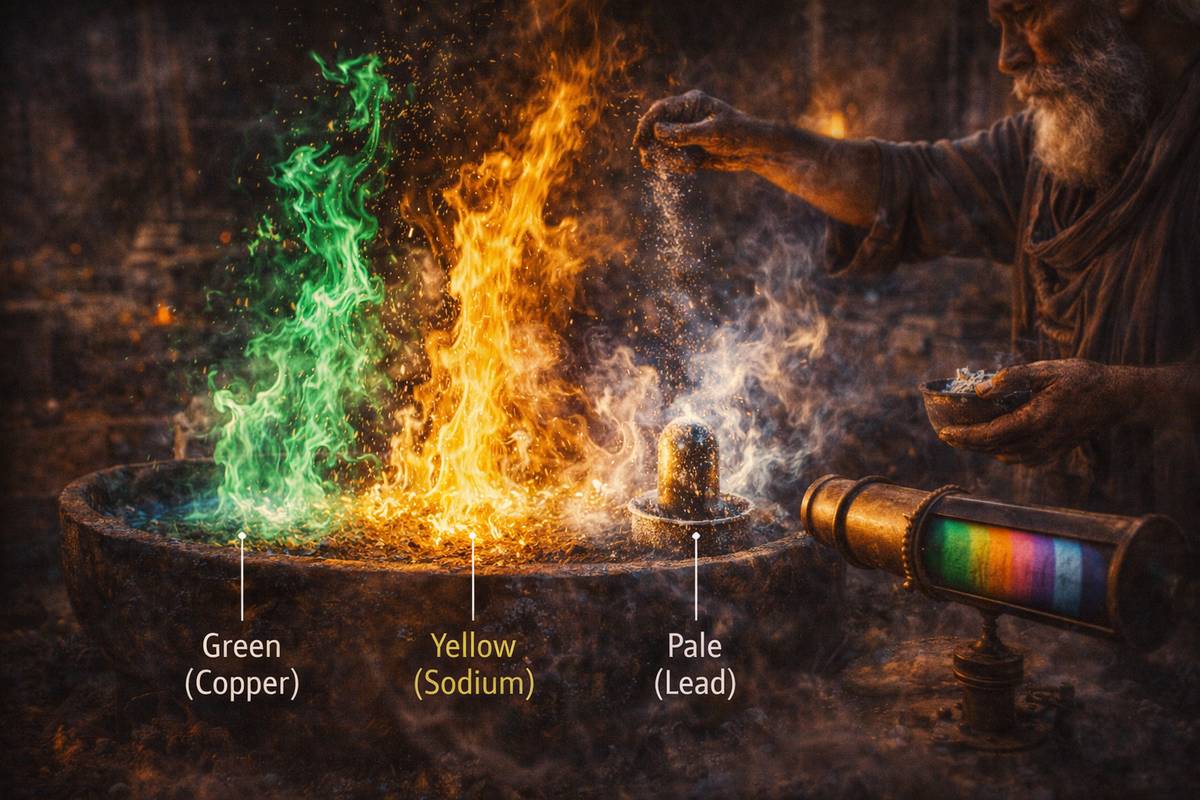
The Concept Different metals burn in different hues. For example, sodium burns yellow, while copper burns green/blue. This is a key strategy for distinguishing between them.
The Story If you walked into an Indian metallurgy lab in 800 CE, you would see chemists identifying metals by the color of their fire. In the Rasarnava, they documented that copper burns with a blue flame, tin with a “pigeon-colored” flame, and lead with a pale hue. This qualitative chemical analysis was happening over a thousand years before Robert Bunsen formalized the “Bunsen Burner” flame test in 1860. It is the exact same science that paints the sky with colors during Diwali today and allows modern astronomers to identify the elements in distant stars.
The Timeline
| Milestone | Details |
| Western Ref. |
1860 CE (Bunsen & Kirchhoff) |
| Indian Source |
800 CE (Rasarnavam, Rasarnava) |
| Chron. Gap |
Over 1,000 Years |
The Original Text
Sanskrit Shloka: शुल्बेन नीलवर्णेन कपोतेन च वङ्गकम् । हरितालेन वर्णेन ज्ञायते सर्वलोहकम् ॥
Transliteration: Śulbena nīlavarṇena kapotena ca vaṅgakam | Haritālena varṇena jñāyate sarvalohakam || Rasarnava (4.51) ‘Shulbena nila…’ (Copper yields a blue flame…) .
Meaning: “Copper (Shulba) is known by a blue flame; Tin (Vanga) by a pigeon-colored (grey/white) flame… By the color of the flame (with yellow orpiment), all metals can be identified.”
Related Innovations The Kautukachintamani (c. 15th century CE) documented formulae for creating coloured pyrotechnics for celebrations using metal salts. The Arthashastra (about 300 BCE) used Flame Colour Tests, instructing assayers to examine the colour of burnt metal to detect imperfections in gold and silver coinage.
Fun Fact This is the exact same chemistry used to create colours in Diwali fireworks today.
The Modern Legacy This concept underpins spectroscopy, which is the study of light from stars to determine their composition.
Recent Post
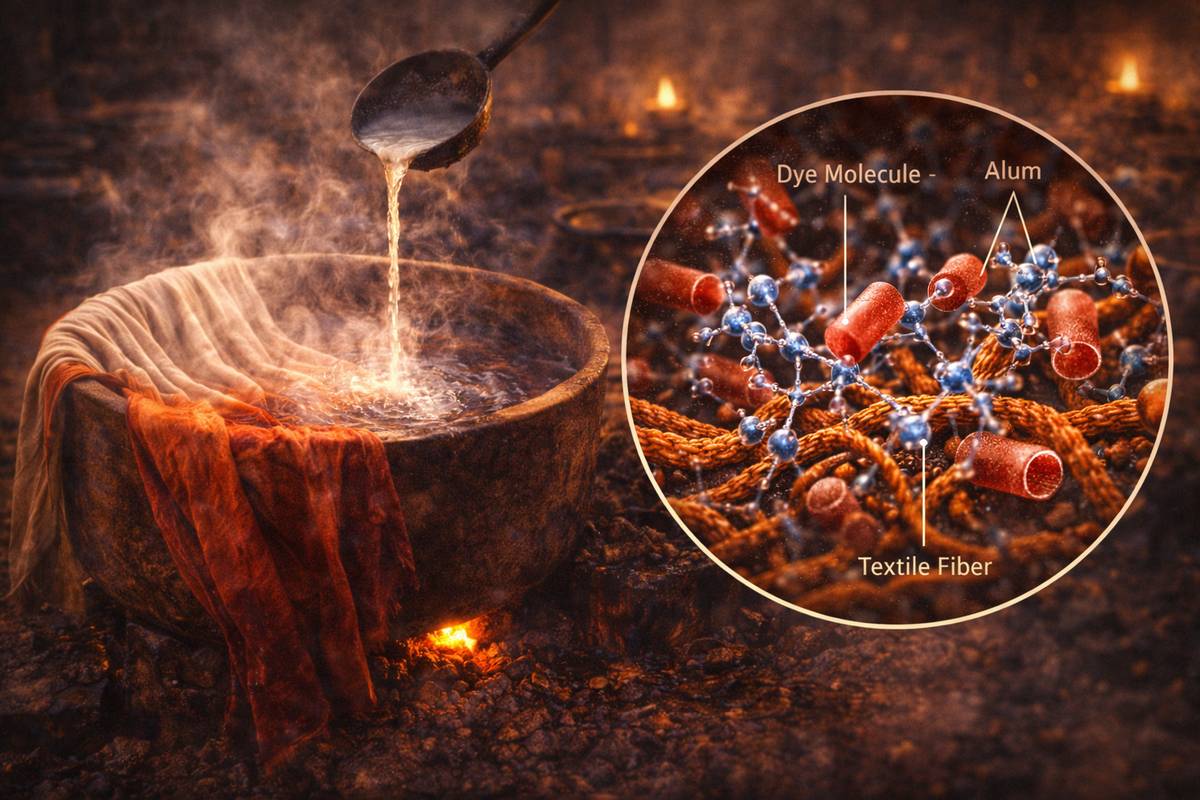
The Concept Dipping clothing in dye will cause it to [...]
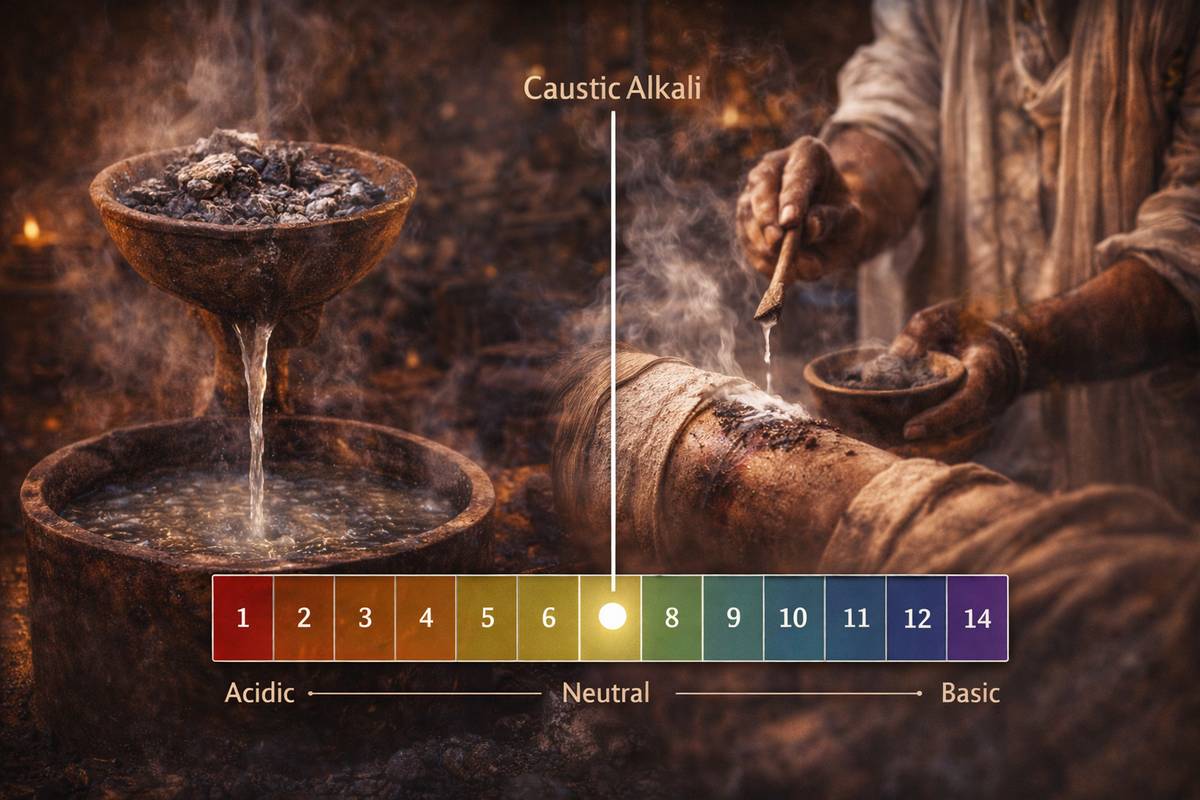
The Concept In chemistry, acids and bases (alkalis) are analogous [...]