The Concept
A democracy is a system of government where the people are in charge. It is said to have started in Greece (Athens).
The Story
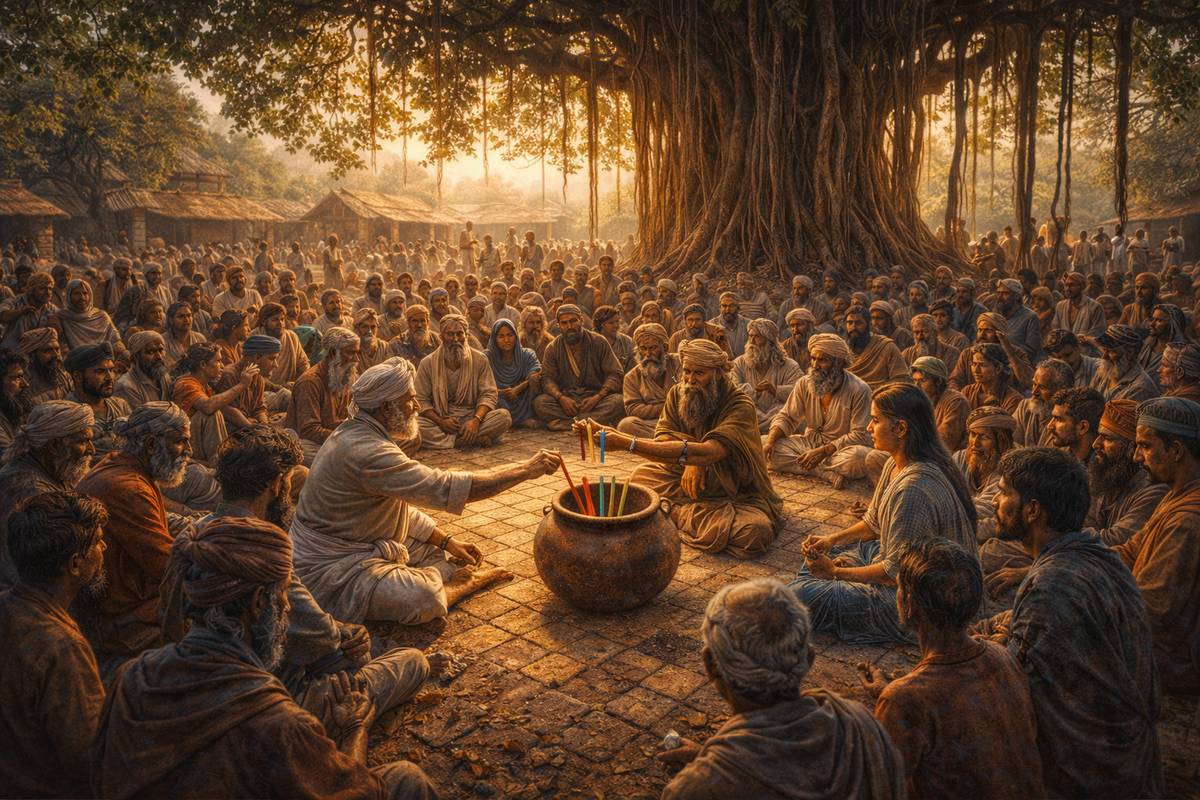
We are often told that democracy was born in Athens, but long before the Greeks, India was home to the Mahajanapadas—Great Republics like Vaishali. In these states, power didn’t belong to a king by birth, but to the people through an assembly (Sabha). They used quorums, secret ballots (Salakas), and motions to make decisions, a tradition that was so deeply rooted it survived for 5,000 years in the village Panchayat system. While empires rose and fell, the Indian spirit of collective decision-making remained the bedrock of the nation’s political science.
The Timeline
| Milestone | Details |
| Western Ref. | 500 BCE (Athenian Democracy) |
| Indian Source | Prior to 10,000 BCE (Vedic Sabhas/Samitis); 600 BCE (Licchavi Republic) |
| Chron. Gap | Precedence of >9,500 Years |
The Original Text
The Rig Veda (10.191.3) states: ‘Samanam mantrah…’ (Common be your prayer, common be your end…) establishing the spiritual basis for collective governance.
Related Innovations
Secret Ballot (Salaka) – The use of coloured wooden sticks (Salakas) to vote secretly on controversial issues in the assembly (Vinaya Pitaka, c. 400 BCE); Decentralisation (Panchayat) – The system in which every village was a self-governing republic, isolating rural life from imperial changes (Rig Veda, Uttiramerur Inscriptions, 920 CE).
Fun Fact
The village panchayat system (council of five) is a decentralised democracy that has existed in India for 5,000 years, outliving empires.
The Modern Legacy
Political science and constitutional law are the foundations of modern science.